
 Cassettefrom $1,312

How does a multi-zone mini split work?
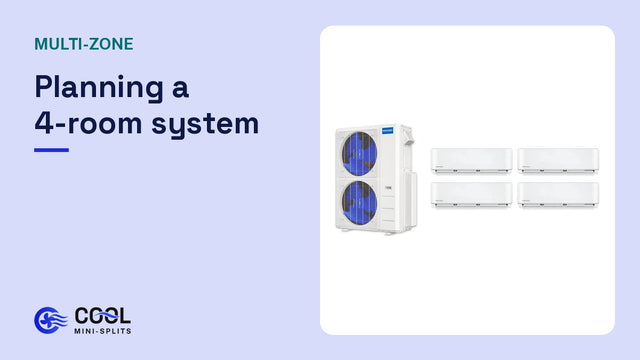
Short answer: A MRCOOL DIY 5th Gen multi-zone mini split uses one outdoor unit to feed 2 to 6 indoor units, and each room gets its own line set and its own temperature setting. The indoor units can add up to more BTU than the outdoor unit. When every room runs hard at the same time, they share the outdoor unit's capacity, and it never goes over its rating.
The question we hear most from people pricing a multi-zone mini split is simple: how can one box on the side of the house heat and cool four separate rooms? This page explains how a MRCOOL multi-zone system works, what happens on the hottest afternoon when every room is calling, and where the limits are.
Multi-zone is only offered in the DIY 5th Gen line. DIY Select and DIY EasyPro are single zone systems, one outdoor unit per room.
What comes in a MRCOOL multi-zone system?
Every system has three kinds of parts:
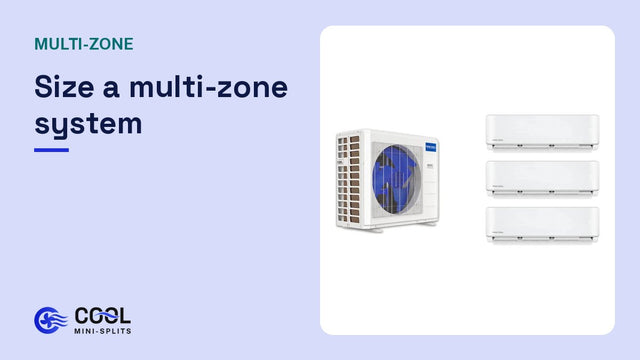
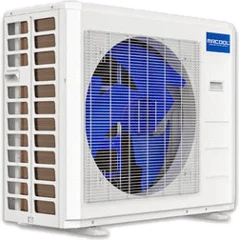
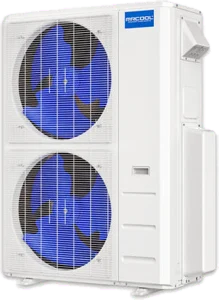
- Outdoor unit: one per system, in 18K, 27K, 36K, 48K or 55K BTU.
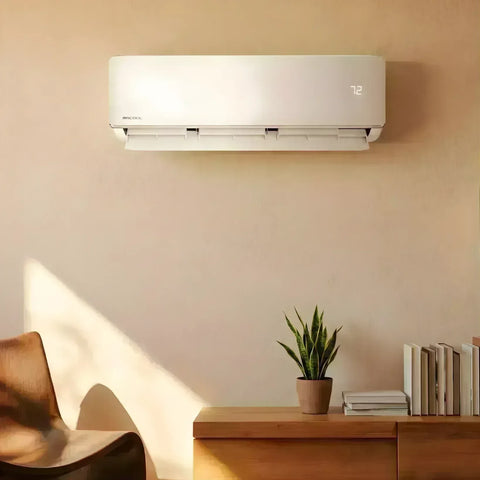
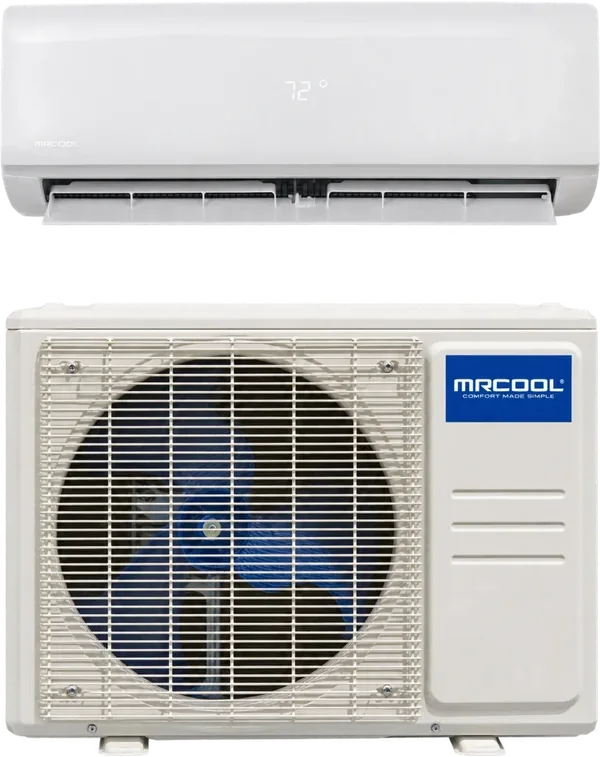
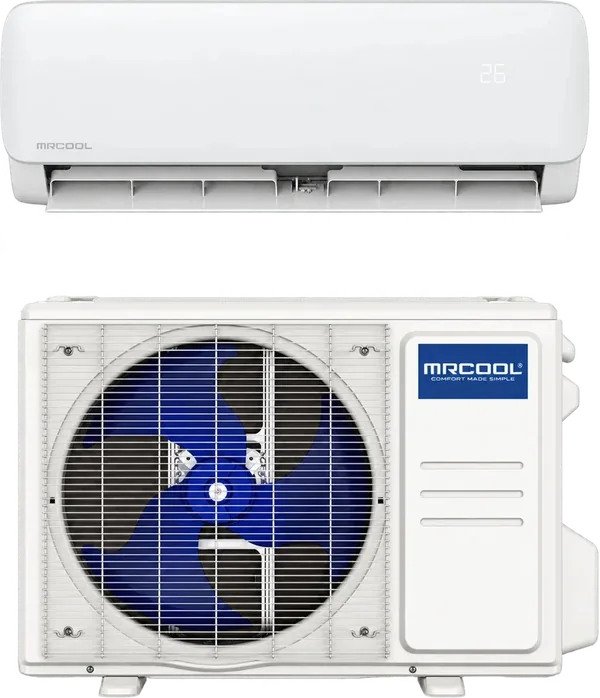
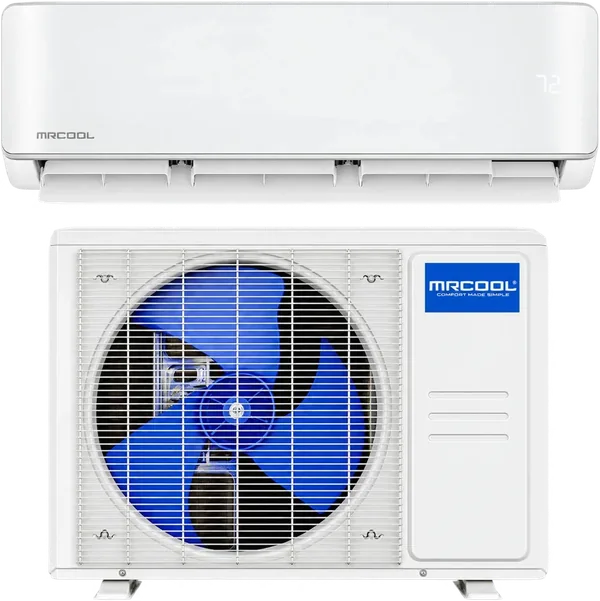
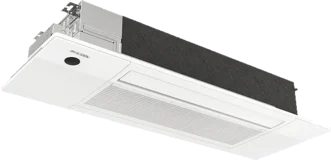
- Indoor units: one per room, either a wall-mounted air handler or a one-way ceiling cassette, in 6K, 9K, 12K, 18K or 24K (cassettes run 6K to 18K).
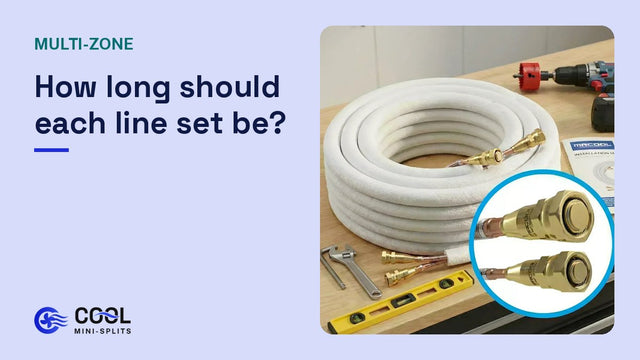
- Line sets: a pre-charged Quick Connect set for each room. Complete wall systems include a 16 ft line set for each room.
Complete wall systems start from $2,923 for 2 rooms (prices as of November 2026), $3,607 for 3 rooms and $4,836 for 4 rooms. Cassette systems cost more, from $4,633 for 2 rooms. You can browse every combination in our multi-zone collection.
| Outdoor unit | Rooms it serves | Typical use |
|---|---|---|
| 18K | 2 to 3 | Small rooms only: takes 6K, 9K and 12K indoor units |
| 27K | 2 to 4 | A living area plus two or three bedrooms |
| 36K | 2 to 5 | Mid-size house, one larger room plus bedrooms |
| 48K | 2 to 6 | Larger house or several big rooms |
| 55K | 2 to 6 | The most capacity, for big rooms or cold winters where everything runs |
How does one outdoor unit feed several rooms?
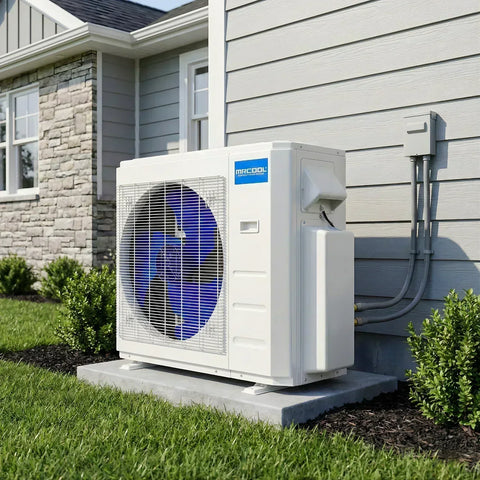
The outdoor unit holds an inverter compressor, which speeds up or slows down instead of switching hard on and off. Each room's line set connects to its own port on that unit, so refrigerant travels to each indoor unit through a separate pair of pipes.
Every indoor unit reads its own room temperature. You set the bedroom to 66°F and the living room to 72°F with the remote or the MRCOOL app, and each one holds its own number.
A room you aren't using can stay off. When only the home office is running, the compressor slows down to match that one small load, so you aren't paying to condition empty rooms.
This 27-second overview shows a whole-home setup, handy for picturing one outdoor unit feeding several rooms before you plan yours.
Can the indoor units add up to more BTU than the outdoor unit?
Yes, and this is how most multi-zone systems are meant to be used. Take a 27K outdoor unit with three 12K wall units. On paper, that's 36K of indoor units on a 27K outdoor unit.
Here is what happens through a summer day:
| What's running | Indoor units asking for | What each room gets |
|---|---|---|
| Living room only | 12K | The full 12K |
| Living room and one bedroom | 24K | The full 12K each (24K is under 27K) |
| All three, running hard on the hottest afternoon | 36K | About 9K each (27K shared three ways) |
Nothing breaks when all three rooms call at once. The outdoor unit shares its 27K between them and never pushes past it. Each room still cools, only more slowly than it would with the outdoor unit to itself.
So the rule we use with customers is this: size the outdoor unit for the rooms you run at the same time on the hottest or coldest day of the year. A guest room that sits closed most of the year barely counts. A living room and kitchen that run all afternoon count fully.
Next: how do I size each room, then pick the outdoor unit?
Can one room heat while another room cools?
No. On this system all rooms run in the same mode at the same time. Every room can have a different temperature, but they're all heating or all cooling.
Most of the year this never comes up. It shows up in spring and fall, when a sunny south room hits 78°F in the afternoon while a north bedroom sits at 64°F. You pick the mode that suits the house, and the room that doesn't need it simply holds at its setting.
If you have a space that needs cooling all winter, such as a server closet or a sunroom with big glass, give it its own single zone system so it can run its own mode.
Is a multi-zone better than separate single zones?
It depends on the rooms and the budget. Here are the honest numbers for two small rooms:
- Two DIY Select 9K single zones at $1,249 each come to $2,498, less than the 2-room multi-zone. You get two outdoor units, two circuits, an 11.5 ft line set each and a 1 yr parts / 2 yr compressor warranty.
- With DIY EasyPro, two 9K single zones at $1,487 each come to $2,974, close to the multi-zone price, with leak detection and a 3 yr / 5 yr warranty.
- In the DIY 5th Gen line, two 9K single zones at $2,329 each come to $4,658. The 2-room multi-zone, from $2,923, gives you the same line with one outdoor unit to mount and wire.
Multi-zone makes sense when you want 5th Gen features in several rooms, one outdoor unit on the wall and one electrical hookup outside. The 5th Gen warranty is 5 years on parts and 7 on the compressor, with a lifetime compressor option through registration and MRCOOL's paid Care program.
Who should skip multi-zone:
- You only need one or two rooms and the cheapest price matters most. Two Select single zones cost less.
- One room needs cooling while the rest of the house heats.
- A room is more than 75 ft of line set away from where the outdoor unit can go.
- You want a backup. If one outdoor unit stops, every room on it stops, while separate single zones fail one room at a time.
Next: how long should each line set be?
What if my rooms are on different floors or far apart?
The MRCOOL 5th Gen multi-zone manual sets three limits you need to plan around:
- Each room's line set can be up to 75 ft.
- All line sets added together can total 172 ft on the 3-room outdoor unit and 221 ft on the 4- to 6-room units. For a 2-room setup, check the manual for your outdoor unit.
- The height difference between indoor units can be up to 24 ft.
A basement family room and a second floor bedroom on the same system can come close to that 24 ft figure, so measure floor to floor before you buy. Our line set length guide shows how to measure every run.
What if it hits −20°F where I live?
The 5th Gen multi-zone keeps heating down to −13°F outside. Below that, keep a backup heat source and call us for cold-climate sizing. Check the heating range on the multi-zone specifications page before you rely on it as your only heat.
What if I want ceiling cassettes in some rooms?
A cassette in the living room with wall units in the bedrooms is a common plan, built from separate parts, so ask us to check the combination before you order. A one-way ceiling cassette starts from $1,312 as a separate part, against $457 for a wall air handler, and it needs room above the ceiling. Our cassette vs wall unit guide covers when the extra cost pays off.
What should you do next?
Write down every room you want to condition, with its square footage. Mark which rooms run at the same time on your hottest and coldest days, then measure the line set path from each room to where the outdoor unit will sit.
With that list in hand, call us at +1 (844) 999-9725, Monday to Friday, 9 AM to 5 PM EST, or text 302-385-6142. We'll help you match each room to an indoor unit and pick the outdoor unit that fits how you live in the house.