
 Cassettefrom $1,312

How quiet is a MRCOOL DIY mini split?
Short answer: At its quietest, a MRCOOL DIY indoor unit runs at 18 dB(A) in silent mode, softer than a whisper, on all three lines we sell. The outdoor units are rated 54 to 61 dB(A) for DIY Select and DIY EasyPro and 54 to 60.5 dB(A) for DIY 5th Gen, around or below the level of normal conversation, and that sound stays outside the house.
If you're looking for the quietest DIY AC for a bedroom, nursery or home office, the numbers above are the place to start. This article explains what those decibel figures mean, how they compare to sounds you know, and where to put each unit so you hear as little as possible.
What does dB(A) mean?
Decibels measure sound level, and the "A" means the reading is weighted toward what human ears pick up best. It's the standard way equipment noise is rated.
The scale is logarithmic, which trips people up. Every 10 dB increase sounds roughly twice as loud, and a 3 dB change is barely noticeable. So a unit at 38 dB sounds about four times louder than one at 18 dB, not twice as loud.
What do 18 dB and 60 dB sound like?
| Approximate level | Everyday sound | MRCOOL DIY rating |
|---|---|---|
| 10 dB | Normal breathing | |
| 18 to 20 dB | Rustling leaves | Indoor unit, silent mode: 18 dB(A) |
| 30 dB | A whisper | |
| 40 dB | A quiet library, a refrigerator hum | |
| 50 dB | Moderate rain, a quiet office | |
| 55 to 60 dB | Normal conversation | Outdoor unit: 54 to 61 dB(A) |
| 70 dB | A vacuum cleaner |
The everyday levels are rough figures, and published references vary by a few decibels. The MRCOOL ratings come from the product specs; each size has its own figures on the single zone specifications page.
How quiet is the indoor unit in daily use?
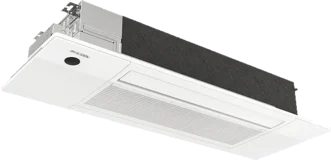
The 18 dB(A) figure is silent mode at the lowest fan speed. On higher fan speeds, or during a hard cool-down on a hot afternoon, it's louder, and the spec page lists the level for each speed.
What you'll hear is mostly moving air. You may also notice the louver motor when the unit starts, a soft tick as the plastic housing warms or cools, and a brief swish of refrigerant now and then, especially in heat mode when the outdoor unit runs a defrost.
Does silent mode cost you anything?
Yes, some capacity. A slower fan moves less air, so silent mode works best at night in a room that's sized right. On a 95°F afternoon in a room at the unit's max size, it may not hold your setpoint.
Why does sizing affect noise?
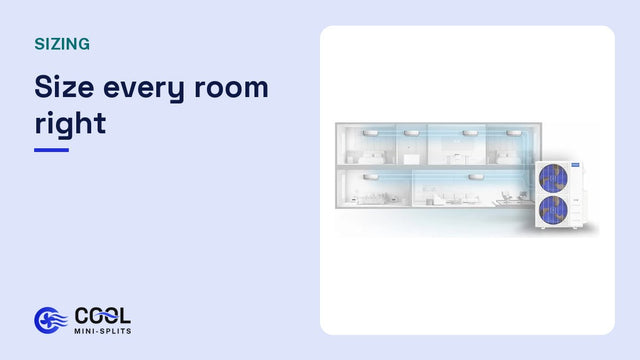
A unit that's too small runs at high fan most of the day, which is its loudest setting. One that's far too big starts and stops often, and you notice each restart. A correctly sized inverter unit spends most of its time at low speed, which is also its quietest. Our sizing guide walks through the math.
How loud is the outdoor unit?
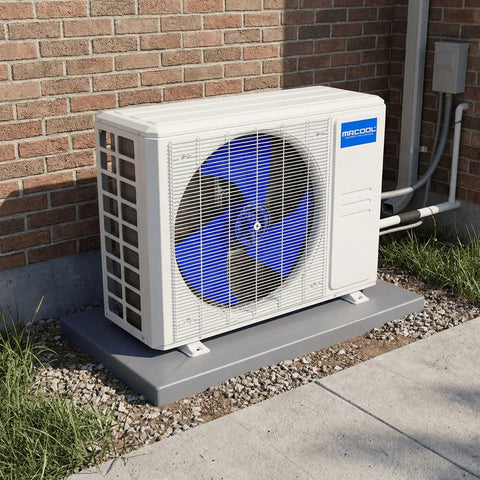
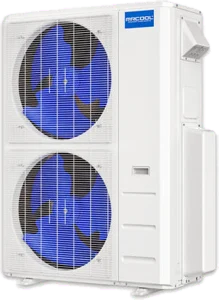
The outdoor ratings run 54 to 61 dB(A) for DIY Select and DIY EasyPro, and 54 to 60.5 dB(A) for DIY 5th Gen. The gap between the lines is small; where you put the unit matters far more than which line you choose.
Distance helps a lot. In open air, sound drops about 6 dB each time you double the distance, so moving the unit from 10 ft to 20 ft from a window makes a clear difference. Walls, fences and corners work the other way and bounce sound back toward you.
An inverter also helps here. A one-speed condenser is either off or at full blast, while an inverter outdoor unit spends much of its time running slower than full speed.
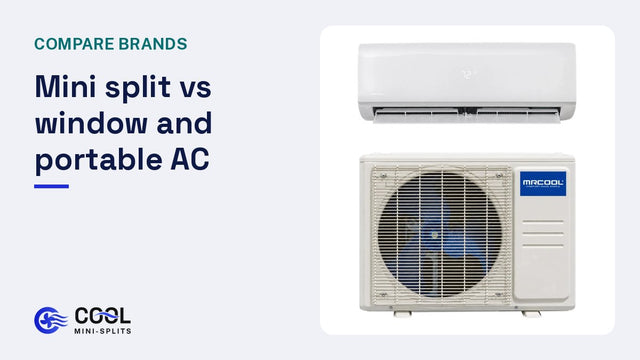
Next: How does a mini split compare to a window or portable AC overall?
How does a mini split compare to a window or portable AC for noise?
The biggest difference is where the compressor sits. A window unit has its compressor and outdoor fan in a box hanging in your window, a few feet from your bed. With a portable AC, the compressor sits right on the floor of the room.
A mini split moves the compressor and the loud outdoor fan outside, on the other side of the wall or farther. Inside, you have only the indoor fan. That's why people who switch from a window unit in a bedroom tend to notice the quiet first and the cooling second.
Where should I put the outdoor unit for less noise?
- Keep it away from bedroom windows, yours and your neighbor's.
- Avoid a narrow side yard between two houses, where the walls bounce sound back and forth.
- Don't face it toward a patio or deck where you sit in the evening.
- Set it on a solid, level base. The E Lite equipment pad ($172, prices as of November 2026) keeps it off the ground and stable.
- If you use a wall bracket ($127 for 9K to 18K, $147 for 24K and 36K), mount it on a garage or utility room wall. A bracket on a bedroom wall can carry some vibration into the room.
- Strap the line set so it can't rattle against siding. A LineGuard cover kit ($129) holds it neatly along the wall.
- Follow the clearances in the installation manual for your size, and check any HOA or town rules on where equipment can go.
Where should the indoor unit go in a bedroom?
Not straight over the headboard. Airflow on your face feels louder and colder than it is. A side wall or the wall facing the bed works better.
The DIY EasyPro and DIY 5th Gen have Follow Me, which reads the temperature at the remote instead of up at the unit. Keep the remote on the nightstand, and the system responds to the temperature where you are. The DIY Select doesn't have this feature.
What if my mini split gets louder over time?
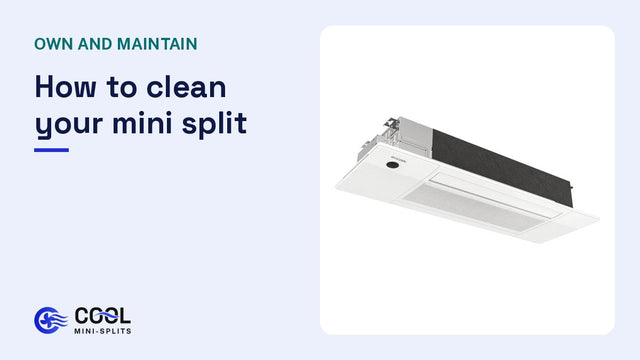
Dirty filters are the usual cause. They cut airflow, so the fan works harder to move the same air. Cleaning intervals are in your owner's manual, and our cleaning guide covers filters, coil and outdoor unit.
A new rattle often comes from a loose cover panel or a line set touching the house. For grinding, loud buzzing or any sound you can't trace, contact MRCOOL support at support.mrcool.com and check the manual. Our phone line handles sizing and choosing a system, not troubleshooting.
How do I plan a quiet install?
Size the unit correctly first, so it runs at low speed most of the time. Then walk around the house and pick an outdoor spot away from bedroom windows and sitting areas, and measure the line set route from there.
When you're ready, browse our single zone systems. If you'd like help choosing a size for a bedroom or office, call +1 (844) 999-9725, Monday to Friday, 9 AM to 5 PM EST.