
 Cassettefrom $1,312

MRCOOL DIY vs Universal Series: should you go ductless or central heat pump?
Short answer: Start with one question: do you have ducts? The Universal is a ducted central heat pump, an air handler plus an outdoor unit that feeds your existing ductwork, and it's normally installed by an HVAC contractor. The DIY Series is ductless, one indoor unit per room, and built for you to install yourself.
Both are MRCOOL heat pumps running on R-454B, and both cool and heat. They just solve different houses. We sell the DIY lines only, so below we describe the Universal in general terms and then show which homes fit which.
What is the MRCOOL Universal Series?
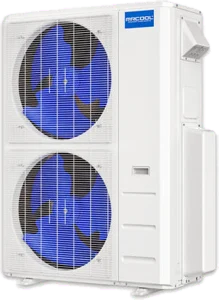
The Universal is a central split system. An air handler sits indoors in a closet, attic, basement or garage, and it connects to the supply and return ducts that already run through the house. An outdoor heat pump unit sits on a pad outside, just like a central air conditioner.
MRCOOL lists the Universal split from 24K to 60K BTU, which is roughly 2 to 5 tons. Its product page shows heating at full capacity down to −13°F, operation down to −22°F, and a 10-year warranty badge. Read the warranty document for the registration and installation terms before you count on it.
MRCOOL offers the Universal with its No-Vac pre-charged line set or with standard flare connections. The No-Vac option removes the vacuum step on the refrigerant side. The rest of the job stays big: setting the air handler, tying it into the plenum and ducts, a condensate drain, thermostat wiring and a 230V circuit. That's why most Universal systems go in with an HVAC contractor on the job.
What is the MRCOOL DIY Series?
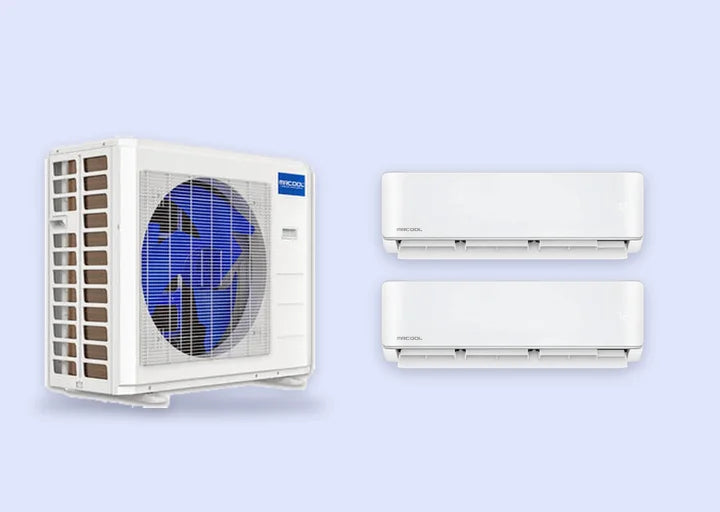
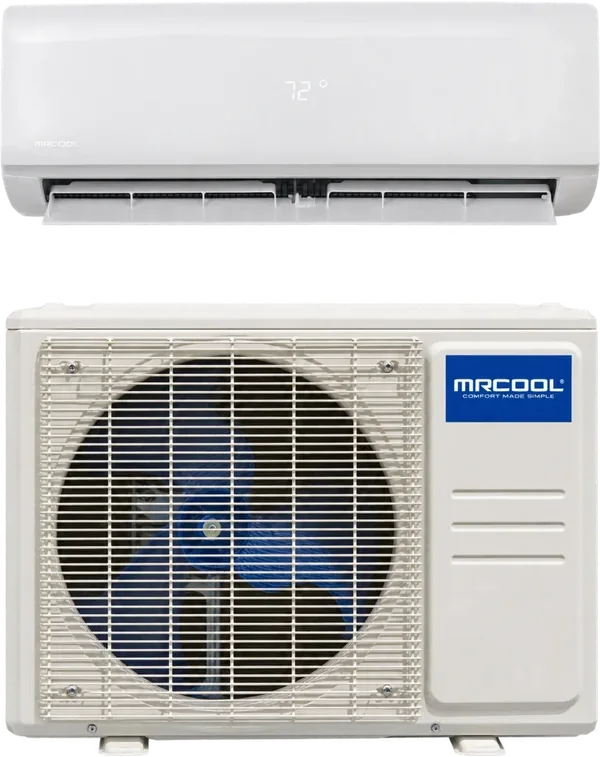
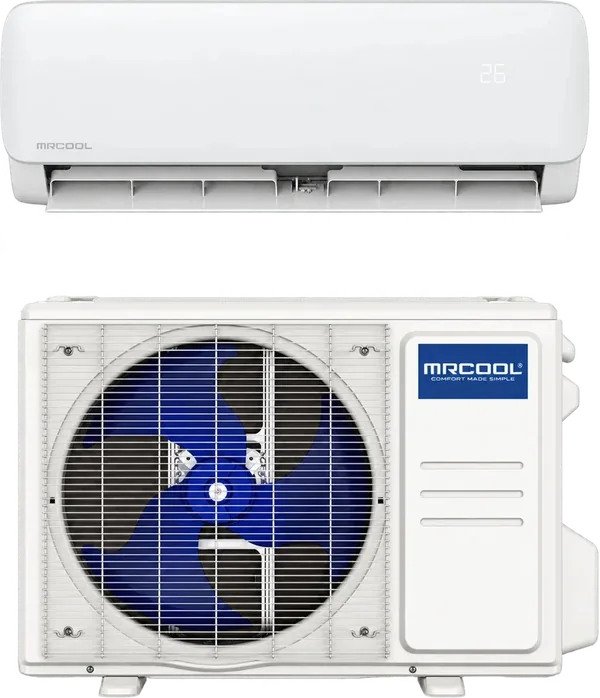
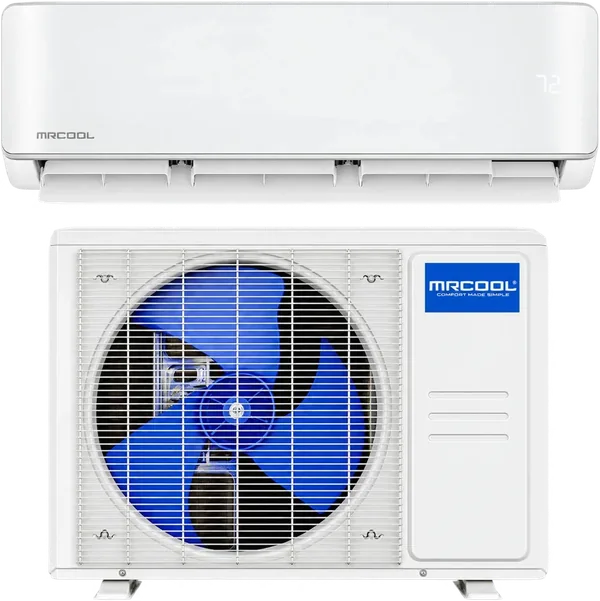
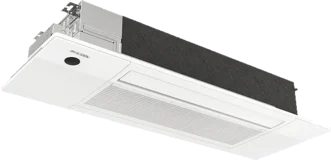
The DIY Series is a ductless mini split. Each room gets its own wall unit or ceiling cassette, connected to the outdoor unit by a pre-charged Quick Connect line set. There's no ductwork, no vacuum pump and no HVAC tech on the refrigerant side.
We carry three DIY lines:
- DIY Select, from $1,249 (prices as of November 2026): single zone, 9K to 24K, heats to −13°F.
- DIY EasyPro, from $1,487: single zone, 9K to 24K, leak detection, ENERGY STAR on 12K to 24K.
- DIY 5th Gen, from $2,329: single zone 9K to 36K, up to 23.6 SEER2, and multi-zone for 2 to 6 rooms on one outdoor unit.
Each indoor unit has its own setpoint, controlled from the remote or the MRCOOL app, with Alexa and Google Assistant support.
Which homes fit the Universal, and which fit DIY ductless?
Find your house in this table. It's the fastest way to see which system makes sense.
| Your home | Better fit | Why |
|---|---|---|
| Ducts in good shape, old central AC or heat pump at the end of its life | Universal, through a contractor | It reuses the ducts and one thermostat runs the whole house |
| No ducts at all (boiler, baseboard, radiators, wood stove) | DIY 5th Gen multi-zone | Adding ducts to a finished house is a major remodel |
| Central air works, but one room is always too hot or cold | DIY single zone in that room | Fixes the problem room without touching the main system |
| Garage, addition, sunroom or bonus room | DIY single zone | Extending ducts there is often impractical |
| Ducts run through a hot attic and leak | Ductless, or seal the ducts first | Leaky ducts waste part of what the heat pump makes |
| You want different temperatures in different rooms | DIY multi-zone | Each room has its own setpoint |
On that duct point: ENERGY STAR estimates a typical house loses about 20 to 30 percent of the air moving through its ducts to leaks, holes and poor connections. A ductless system skips that loss because the air never leaves the room.
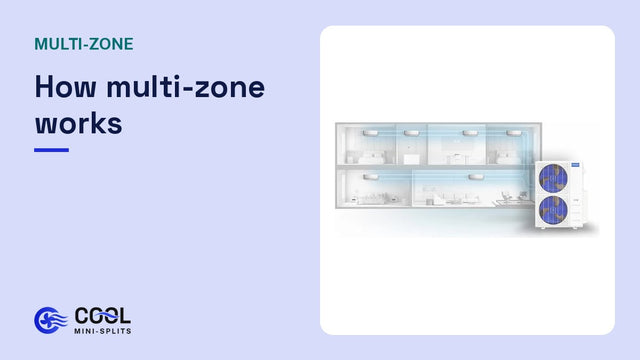
Next: how does one outdoor unit heat and cool several rooms?
Can a DIY multi-zone replace central air for a whole house?
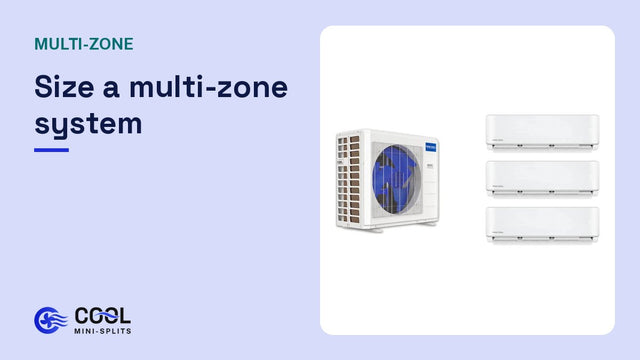
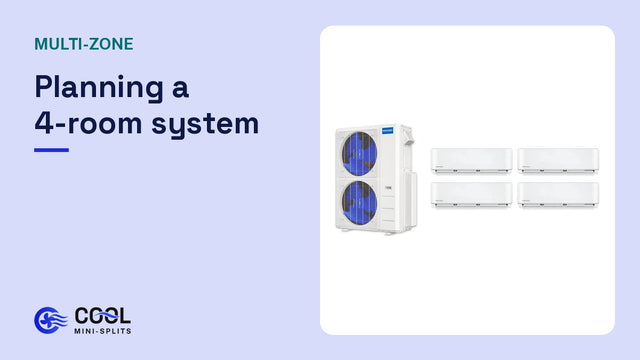
For many houses, yes. The DIY 5th Gen multi-zone runs 2 to 6 indoor units from one outdoor unit: 18K for 2 to 3 rooms, 27K for 2 to 4, 36K for 2 to 5, and 48K or 55K for 2 to 6.
Complete wall systems with a 16 ft line set per room start from $2,923 for two rooms, $3,607 for three and $4,836 for four. Ceiling cassettes cost more, from $4,633 for two rooms, and suit people who don't want a unit on the wall.
The limits to plan around, from the 5th Gen multi-zone manual: up to 75 ft of line set per room, 221 ft total on the 4- to 6-room outdoor units, and no more than 24 ft of height difference between indoor units. Hallways and closets don't get their own unit, so a ductless house relies on open doors and air movement for those spaces.
Notice how each room gets its own indoor unit off one outdoor unit, with no ducts anywhere.
How do you decide between the two?
- Look at your ceilings and floors for supply registers. No registers means no ducts, and the Universal is off the table.
- If you do have ducts, ask an HVAC contractor to check their condition and size before you replace the equipment.
- Count the rooms that need conditioning. One to six rooms fit a DIY system, single zone or multi-zone.
- Decide how much of the work you'll do. DIY means you mount the units and run the lines, with an electrician for the circuit if your town requires one.
- Get a contractor quote for a Universal and price the DIY multi-zone for the same rooms on our multi-zone systems page.
If you're not sure about the install itself, our DIY self-check covers the tools and the electrical part.
What if your house is a mix?
What if I have ducts upstairs but not downstairs?
Keep the central system for the ducted floor and add ductless where the ducts don't reach. A DIY 5th Gen 2-room system covers two rooms on one outdoor unit. The two systems run on their own controls.
What if my winters go below −13°F?
All three DIY lines keep heating down to −13°F outside. Below that, keep a backup heat source or size up, and call us for cold-climate sizing. For a whole house in a very cold climate, plan on that backup no matter which system you choose.
What thermostat do I use with a ductless system?
None on the wall. Mini splits are run by their remote and the MRCOOL app. Wall thermostats made for ducted equipment don't control them, so skip that purchase.
What if my old central system still works?
Then you don't have to decide today. Add a DIY single zone to the room that bothers you most and replace the central equipment when it actually fails.
Next: how do you size each room for a multi-zone system?
What should you do next?
Walk the house and list each room you want to heat and cool, with its square footage. Then use our sizing guide to set a BTU size per room, and pick the outdoor unit that covers the rooms you run at the same time.
If you'd like a second set of eyes on the room list, call us at +1 (844) 999-9725, Monday to Friday, 9 AM to 5 PM EST, or text 302-385-6142. We'll help you choose the sizes and the system.