
 Cassettefrom $1,312

Is it better to get a multi-zone mini split or several single zone units?
Short answer: For 3 or more rooms, one DIY 5th Gen multi-zone usually costs less: a 3-room wall system starts from $3,607 (prices as of November 2026), against $6,987 for three 5th Gen 9K single zones. For 2 rooms it's close, and separate single zones are the better pick when the rooms sit at opposite ends of the house, each one needs full power at the same time, or you can't have every room go off if one outdoor unit fails.
This is the MRCOOL system showdown we get asked about most: one outdoor unit feeding every room, or one complete system per room. Both are DIY, both use pre-charged Quick Connect line sets, and both heat down to −13°F. The difference is in the price per room, the work outside, the electrical and what happens on the day something stops.
Below are our real store prices for 2, 3 and 4 rooms, the trade-offs we tell customers about on the phone, and a few setups where mixing the two makes the most sense.
What are you choosing between?
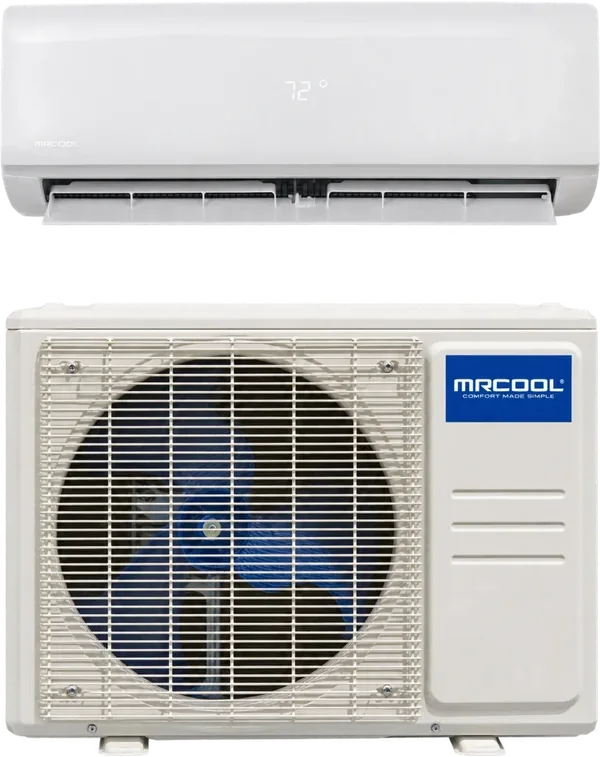
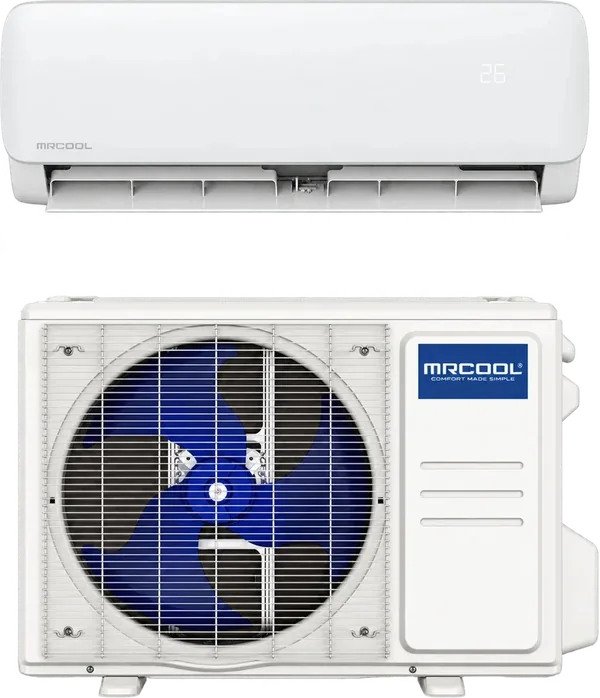
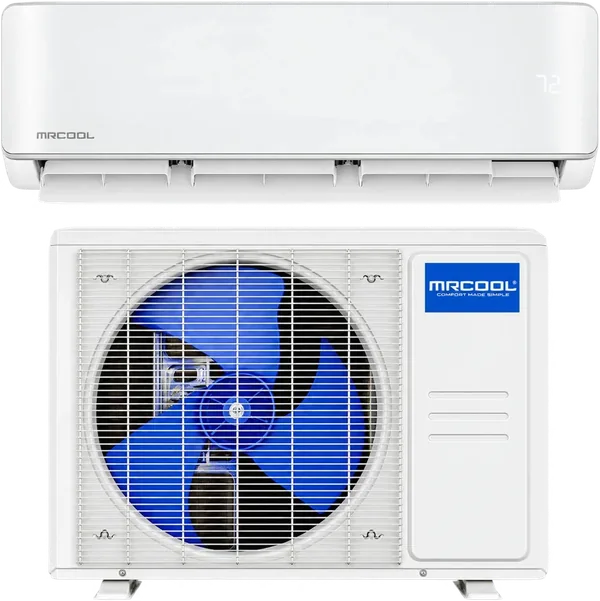
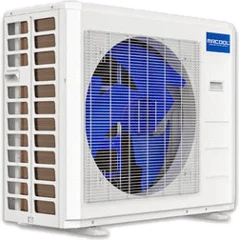
A single zone system is one indoor unit, one outdoor unit and one line set. You can buy it in all three lines we carry: DIY Select, DIY EasyPro and DIY 5th Gen, in 9K to 24K (the 5th Gen also comes in 36K). Two rooms means two complete systems and two outdoor units on the wall.
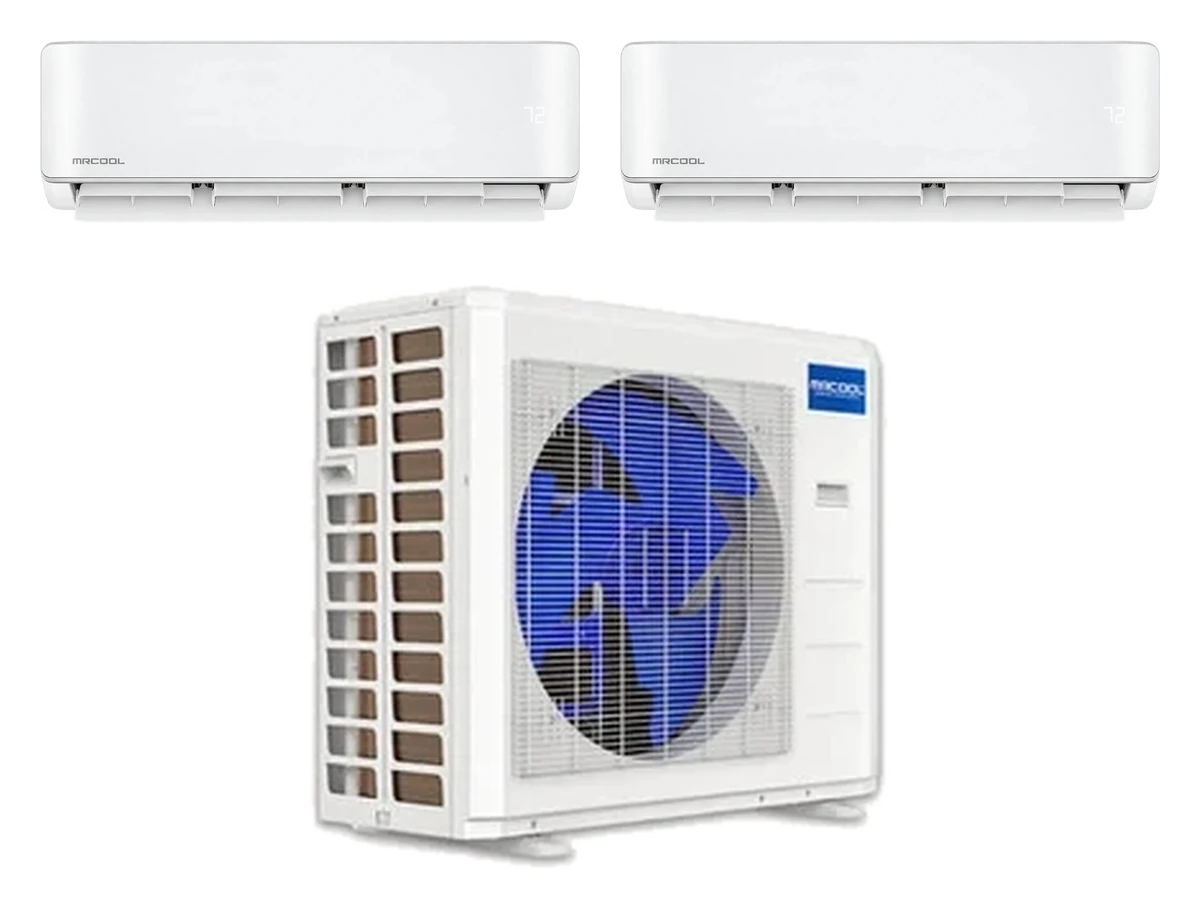
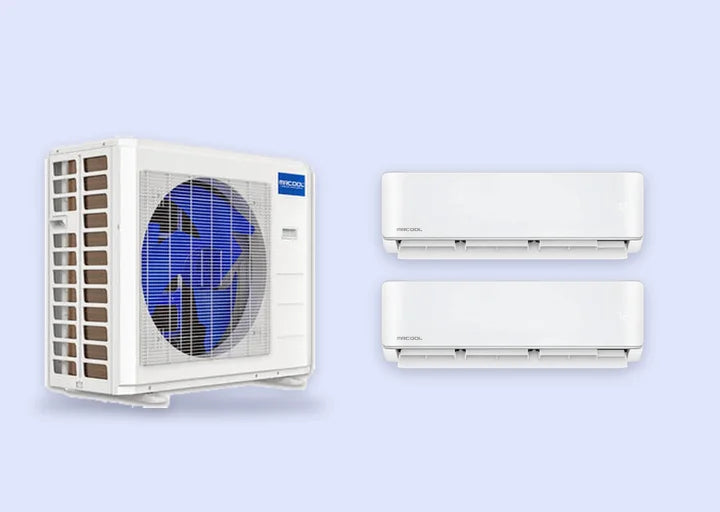
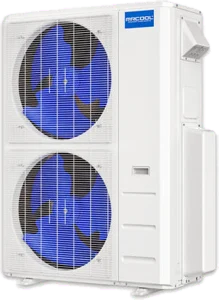
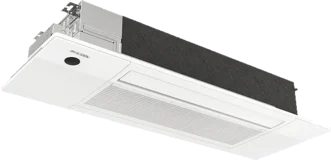
A multi-zone system is one outdoor unit with 2 to 6 indoor units, each on its own line set and its own setpoint. Only the DIY 5th Gen line offers it. Outdoor units come in 18K, 27K, 36K, 48K and 55K, and the indoor units can be wall air handlers or one-way ceiling cassettes, from 6K up.
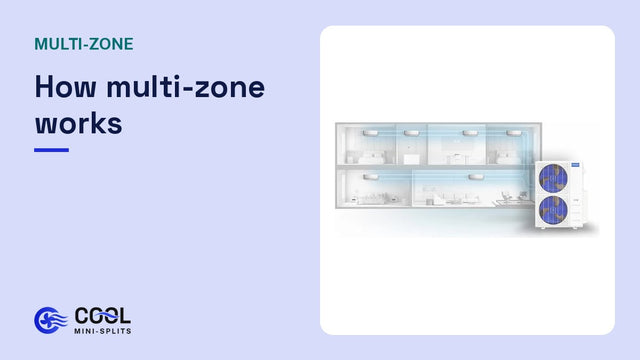
If you want the details of how one outdoor unit splits its output between rooms, our multi-zone explainer covers that. This article is about the buying decision.
Which costs less, single zones or a multi-zone?
Here are the system prices with a 9K single zone in every room, next to the starting price of a 5th Gen multi-zone wall system for the same number of rooms.
| Rooms | DIY Select single zones | DIY EasyPro single zones | DIY 5th Gen single zones | DIY 5th Gen multi-zone |
|---|---|---|---|---|
| 2 | $2,498 | $2,974 | $4,658 | from $2,923 |
| 3 | $3,747 | $4,461 | $6,987 | from $3,607 |
| 4 | $4,996 | $5,948 | $9,316 | from $4,836 |
| Outdoor units | 1 per room | 1 per room | 1 per room | 1 total |
| Line set per room | 11.5 ft | 11.5 ft | 25 ft | 16 ft |
Two notes keep this fair. The multi-zone "from" price is the cheapest combination, usually the smallest indoor units, so three 9K or 12K rooms add a little; the 3-room collection shows each combination's price. And the single zone prices are for the box only.
Every outdoor unit also needs a disconnect ($59), a whip ($72) and a pad ($172) or wall bracket (from $127). That's about $258 to $303 per outdoor unit, so three single zones carry three sets and a multi-zone carries one. For 3 rooms on pads, the totals come to about $4,656 with Select, $5,370 with EasyPro, $7,896 with 5th Gen single zones and $3,910 for the multi-zone.
So the cheapest way to cool two rooms is still two DIY Select units, by about $120 to $170 once the extras are in. From three rooms on, the multi-zone costs less than any single zone line, and it's the 5th Gen with its 5 yr parts / 7 yr compressor warranty. Our full cost breakdown adds the electrician and permit to these numbers.
Why does the choice matter beyond price?
You'll live with this layout for a long time, and the trade-offs show up on ordinary days.
One box outside, or several
Three single zones means three outdoor units, three line set runs up the siding and three covers if you want them hidden (LineGuard kits are $129 per 12 ft). A multi-zone puts one outdoor unit in one spot, which matters on a narrow side yard, a townhouse or a front wall the neighbors see.
What happens when something fails
If a multi-zone outdoor unit stops, every room on it stops. With separate single zones, a fault takes out one room and the rest keep running. If the mini split is your only heat, keep a backup heat source either way, and lean toward single zones for the rooms you can't do without.
Heating and cooling at the same time
All rooms on one multi-zone run in the same mode. A sunroom that wants cooling on a sunny March afternoon while the bedrooms want heat needs its own single zone system.
Full power in every room
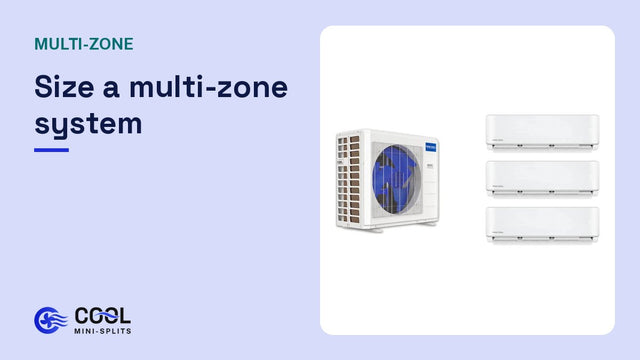
Multi-zone indoor units can add up to more than the outdoor unit. Three 12K rooms on a 27K outdoor unit each get their full 12K when one or two run, and about 9K each when all three run hard. Separate single zones never share, so every room always has its whole capacity.
Running cost
Every line is an inverter that slows down to match the load. A single zone's efficiency rating covers that one pair, while a multi-zone rating depends on the indoor combination, so compare your exact setup on the multi-zone specifications page before you count on one being cheaper to run.
Next: What happens when every room on a multi-zone runs at once?
How do you decide which setup fits your house?
Work through it in this order. Most homes land on one answer by step four.
- Count the rooms. One or two rooms on a tight budget points to DIY Select single zones. Three or more points to a multi-zone.
- Size each room. Use our sizing guide. Small rooms under about 250 sq ft can take a 6K indoor unit, which only the multi-zone offers; single zones start at 9K.
- Mark the rooms that run together. The multi-zone outdoor unit is sized for those, on the hottest or coldest day.
- Walk each line set path. On a multi-zone every run goes to one outdoor spot: up to 75 ft per room, 172 ft in total on the 3-room unit and 221 ft on the 4- to 6-room units, and no more than 24 ft of height between indoor units. Single zones can each sit close to their own room.
- Check the electrical. A multi-zone needs one dedicated 230V circuit and one disconnect. Each single zone needs its own circuit and disconnect; 9K and 12K run on 115V, 18K and 24K on 230V.
- Decide how much downtime you can live with. If one outage taking out the whole house is a deal breaker, split the rooms across more than one system.
On the electrical side, more circuits means more panel space and more electrician time. Many states and towns require a licensed electrician for this part, and breaker and wire sizes are in the installation manual for your size on the manuals page.
Watch for how the one outdoor unit sits outside while the indoor units spread through the house, a quick way to picture your own wall.
Can you mix single zones and a multi-zone?
Yes, and it's often the best plan. A common one: a 3-room multi-zone for the bedrooms and office, plus a DIY Select 9K single zone (from $1,249) for the garage or workshop. The garage gets its own mode and schedule, and a fault there never touches the bedrooms.
Another: a big open great room on a 5th Gen 24K or 36K single zone, with a 2-room multi-zone for the bedrooms down the hall. Single zones can be any of our three lines, so you can save on the room that matters least.
What if your house doesn't fit the simple answer?
What if I want to add rooms later?
With single zones, you add another complete system whenever you like, in any line. With a multi-zone, plan ahead: buy an outdoor unit that takes more rooms than you need today, such as a 27K (2 to 4 rooms) for two rooms now. A wall air handler later starts from $457 plus a line set from $227. Read the manual's section on adding an indoor unit, and keep the total line set limit in mind when you plan the first runs.
What if two rooms are on opposite ends of a long ranch house?
Add up both runs first. If they push past 75 ft for one room, or the total gets close to the limit, two single zones (or two smaller multi-zones) with an outdoor unit at each end are easier and use shorter line sets.
What if I want ceiling cassettes?
The only single zone cassette is the 5th Gen 18K, from $3,418. A multi-zone takes one-way cassettes from 6K to 18K, and cassette systems start from $4,633 for 2 rooms. For several cassette rooms the multi-zone is the way to go.
What if winters here drop to −20°F?
All three lines keep heating down to −13°F outside. Below that you need a backup heat source or more capacity, and splitting the house across two systems helps keep some heat if one stops. Call us for cold-climate sizing.
Next: How do you size each room, then pick the outdoor unit?
What should you do next?
List every room with its square footage, mark which ones run together, and measure the path from each room to where an outdoor unit could go. Then look at your outside wall and your electrical panel, and decide how many boxes and circuits you're willing to have.
With that list, compare the 18K multi-zone systems against the single zone prices above. If you're still torn, call us at +1 (844) 999-9725, Monday to Friday, 9 AM to 5 PM EST, or text your room list to 302-385-6142, and we'll help you pick a layout and sizes. Shipping is free to the 48 contiguous states.