
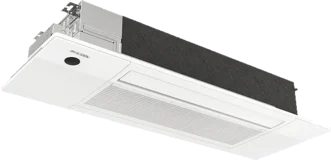
 Cassettefrom $1,312

Is a MRCOOL DIY mini split worth it?
Short answer: A MRCOOL DIY mini split heats and cools one room or several without ducts, and you can install it yourself because the refrigerant lines come pre-charged. Systems start from $1,249 for one room (prices as of November 2026), run at 18 dB(A) indoors in silent mode, and make 2.4 to 3.4 times the heat per kilowatt-hour of electric baseboard. The two honest downsides: the electrical work often needs an electrician, and the upfront price is far above a window unit.
People ask us about the top benefits of MRCOOL DIY mini split air conditioners before they spend money, and they want numbers. Here are ten we can back with figures from the DIY Select, DIY EasyPro and DIY 5th Gen, plus two drawbacks you should weigh.
What is a MRCOOL DIY mini split?
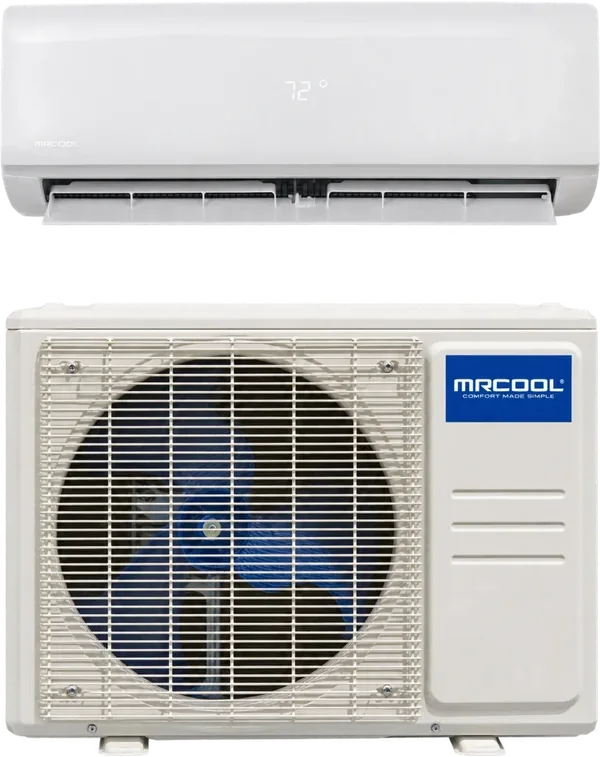
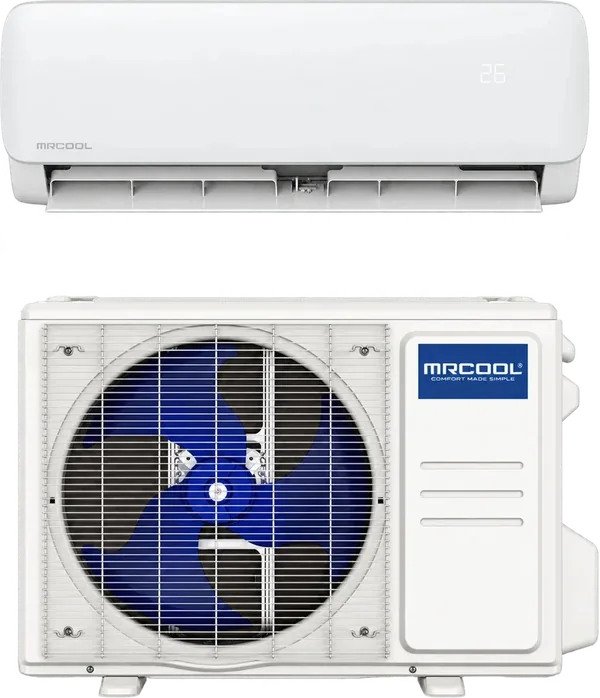
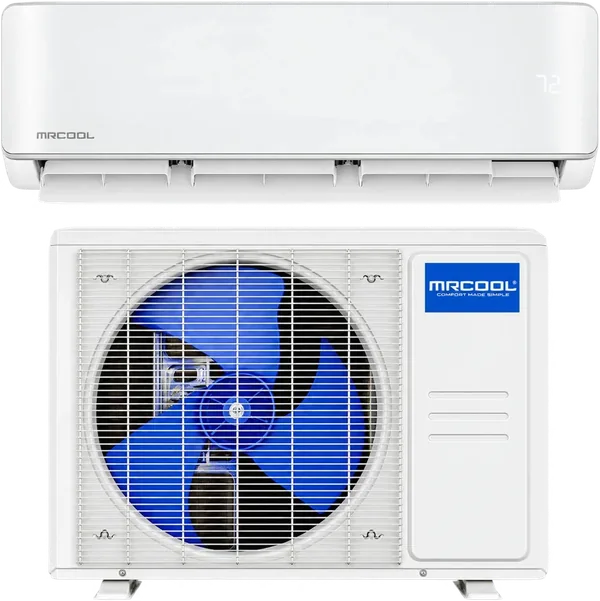
It's a ductless inverter heat pump in two parts: an indoor unit on the wall (or in the ceiling) and an outdoor unit on a pad or bracket. A pre-charged line set joins them through one hole in the wall.
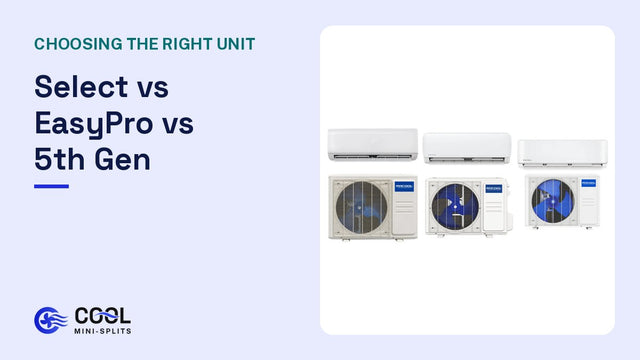
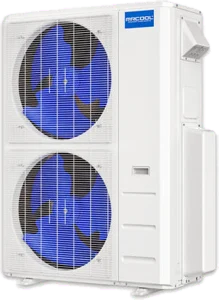
We sell three lines. The single zone systems come in DIY Select, DIY EasyPro and DIY 5th Gen, and the 5th Gen also comes as multi-zone systems that run 2 to 6 rooms from one outdoor unit.
What are the top 10 benefits?
1. No ductwork
The line set, cable and drain pass through a hole you cut with a 3 in hole saw. That makes it a fit for additions, garages, attics and older homes that never had ducts, with nothing torn open inside your walls.
2. Heating and cooling in one system
Every line keeps heating when it's −13°F outside. In summer the same unit cools, so you replace a window AC and a space heater with one system.
3. No HVAC tech for the refrigerant
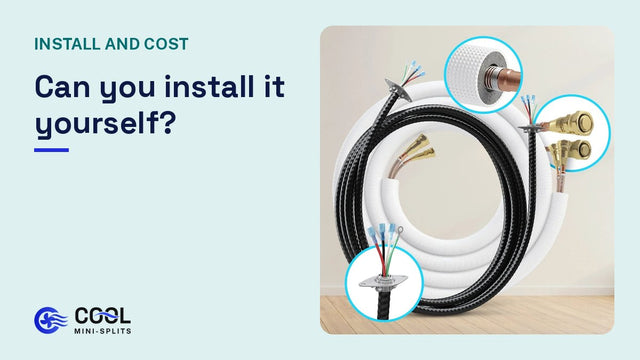
Quick Connect fittings thread onto the indoor and outdoor units, and the refrigerant is already sealed inside the line set. You don't buy or rent a vacuum pump or gauges, and you never handle the R-454B yourself.
4. Each room at its own temperature
On a 5th Gen multi-zone, every indoor unit has its own setpoint. Keep the bedroom at 68°F and the office at 74°F, and turn off the guest room until someone stays.
5. More heat per kilowatt-hour than electric heat
Resistance heat turns 1 kWh into 3,412 BTU, no more. A heat pump moves heat from outdoor air instead, and HSPF2 tells you how many BTU you get per watt-hour.
| Heat source | Heat from 1 kWh |
|---|---|
| Electric baseboard or space heater | 3,412 BTU |
| DIY Select at 8.3 HSPF2 (its lowest) | about 8,300 BTU, roughly 2.4 times as much |
| DIY 5th Gen at 11.5 HSPF2 (its highest) | about 11,500 BTU, roughly 3.4 times as much |
If you heat a room with baseboard today, that ratio is the biggest saving on this list. Your actual figure depends on the size you buy and your winter.
6. An inverter that slows down instead of shutting off
The compressor speeds up and slows down to match the room, so temperatures stay steady rather than swinging every few minutes. Cooling efficiency runs from 16.5 SEER2 on the Select up to 23.6 on the best 5th Gen sizes.
7. A quiet room
Silent mode takes the indoor unit down to 18 dB(A). The compressor, the loudest part, sits outside at 54 to 61 dB(A) depending on size, instead of in your window.
8. Drier air in summer
Every line dehumidifies, and there's a dry mode for muggy days. That helps in basements and in humid summers across the South and East.
9. Control from your phone or voice
The MRCOOL app over Wi-Fi lets you change temperature and mode from anywhere, and Alexa and Google Assistant work with all three lines. Turn the cabin heat up on the drive in.
10. Warranty that covers your own install
MRCOOL covers a DIY install once the system is registered, for the original owner. Coverage runs from 1 year parts and 2 years compressor on the Select up to 5 and 7 on the 5th Gen, with a lifetime compressor option on EasyPro and 5th Gen through MRCOOL's paid Care program.
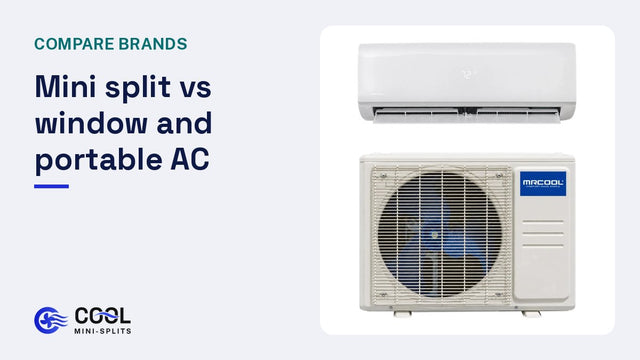
Next: Is a mini split better value than a window or portable AC?
What are the downsides?
The electrical side is real work
Each outdoor unit needs a dedicated circuit, a breaker and a disconnect within sight of it. Many states and towns require a licensed electrician for that part, and permits typically cost about $50 to $300.
The upfront cost is higher than it looks
No system includes the disconnect ($59), the whip ($72), a pad ($172) or wall bracket ($127 to $147), or the wire and breaker. Add those and the electrician, and a single room can run several hundred dollars past the system price. Our total cost breakdown adds it all up.
A third, smaller one: some people don't like the look of a white box high on the wall. If that's you, a ceiling cassette is the way around it, at a higher price.
How do you get these benefits in your home?
- Size each room. Use our sizing guide to turn square feet into BTU. A 12K 5th Gen, for example, is rated for up to 550 sq ft.
- Pick a line. Select for the lowest price, EasyPro for most single rooms, 5th Gen for several rooms, a 36K or the longest warranty.
- Measure the line set run. Select and EasyPro ship with 11.5 ft and the 5th Gen with 25 ft; longer runs take a separate pre-charged line set.
- Line up the electrician. Get the circuit quoted before the system arrives, and check whether your town needs a permit.
- Order and inspect. Systems ship free to the 48 contiguous states from our Kentucky warehouse. Check every box on delivery before you sign.
Benefit number 3 in action: watch how the pre-charged line set connects without a vacuum pump or gauges.
What if a mini split isn't right for your home?
What if I already have central air that works?
If your ducts reach every room and the system is in good shape, a mini split adds less. It still makes sense for a room the ducts never served well, like a bonus room or an addition.
What if I rent?
A mini split needs a hole through an outside wall and a new circuit. Get the landlord's written approval first; otherwise a window unit is the realistic choice.
What if my winters go below −13°F?
No DIY line we sell is rated to heat lower than that. Use a mini split for most of the season and keep your furnace, boiler or stove for the coldest nights, or call us for cold-climate sizing.
Where to start
Measure the room you want to fix first and run it through the sizing guide. Then read our Select vs EasyPro vs 5th Gen guide to choose the line, or call us at +1 (844) 999-9725, Monday to Friday, 9 AM to 5 PM EST, for help picking the size.