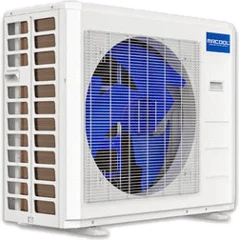
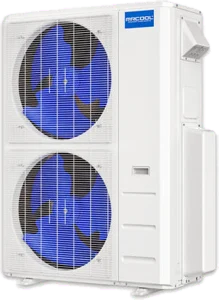

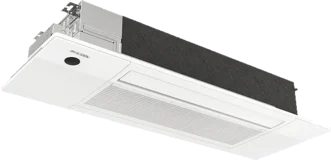
 Cassettefrom $1,312

Should you install a mini split yourself or hire a pro?
Short answer: When you're installing a MRCOOL mini split system, the usual split is this: you do the mounting, the wall hole and the Quick Connect line set, and a licensed electrician does the circuit, breaker and disconnect, typically for $300 to $800. Hire out more only for the risky pieces, like a second-story wall bracket, a masonry wall or a full panel. The table below sorts every task so you can decide piece by piece.
What are your options for getting it installed?
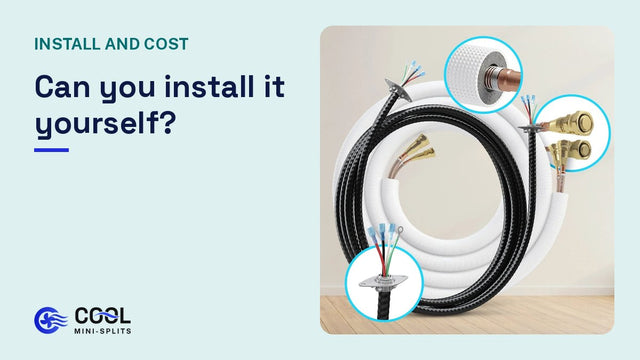
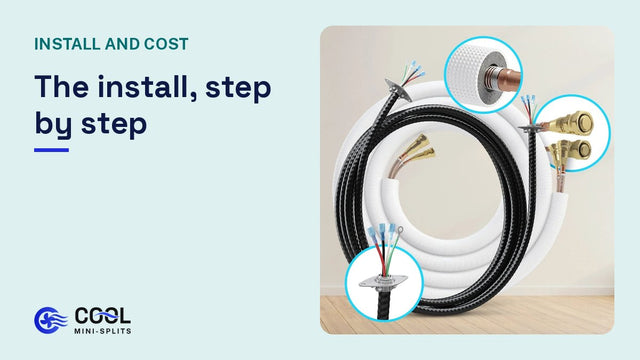
With a MRCOOL DIY Select, DIY EasyPro or DIY 5th Gen system, "DIY or pro" isn't all or nothing. The pre-charged Quick Connect line sets remove the refrigerant work, which is the part that normally forces you to hire an HVAC tech. What's left breaks into tasks you can hand out one at a time.
Most homeowners end up on one of three paths:
| Path | You do | You hire | Added cost beyond parts |
|---|---|---|---|
| Full DIY | Everything, including the circuit | Nobody | Permit, typically $50 to $300 |
| Split the job | Mounting, hole, outdoor unit, line set, cable, startup | Electrician for the circuit | Electrician, typically $300 to $800, plus permit |
| Hire it out | Buy the system, plan the spots | Installer or handyman plus electrician | Labor quotes, plus electrician and permit |
Full DIY only works where your town lets a homeowner wire a new circuit, usually with a permit. Many towns don't, which is why "split the job" is the path we see most.
Why not just hire the whole thing?
You can, and for some houses it's the right call. But the labor you'd pay for is mostly simple work: finding studs, drilling one 3 in hole, setting a unit on a pad and tightening two fittings to a torque spec.
National cost guides put typical HVAC labor for a mini split install at roughly $300 to $1,500 on top of the equipment. On a single room with a DIY Select from $1,249 (prices as of November 2026), that labor can be close to the price of the system itself.
The warranty doesn't push you either way. MRCOOL's warranty covers a DIY install when the system is registered, for the original registered owner. What matters is that the work follows the manual, so keep photos of each step.
Which tasks should you do, and which should you hire?
| Task | Difficulty for a handy homeowner | Usually |
|---|---|---|
| Pick indoor and outdoor spots, measure the line route | Easy | You |
| Mount the indoor wall plate | Easy | You |
| 3 in hole through a wood-framed wall | Moderate | You |
| 3 in hole through brick, block or stone | Hard without a core bit and practice | Hire a handyman or mason |
| Outdoor unit on a ground pad | Moderate, needs two people | You and a helper |
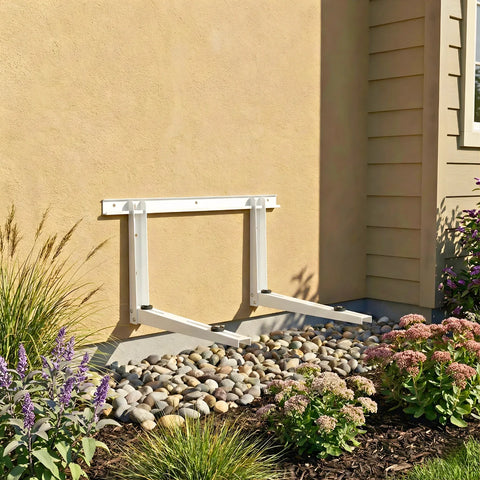
| Outdoor unit on a wall bracket above first floor | Hard and risky on a ladder | Hire |
| Connect the Quick Connect line set | Moderate, needs patience | You |
| Cable between the indoor and outdoor units | Moderate, follow the wiring diagram | You |
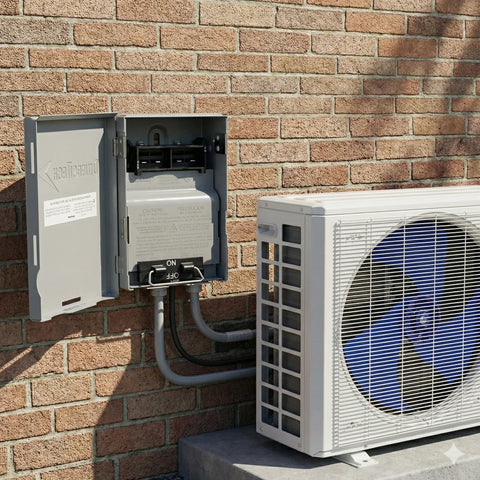
| Dedicated circuit, breaker, disconnect, whip | Regulated in many towns | Licensed electrician |
| Line set cover, startup, app setup | Easy | You |
The breaker size and wire size for the circuit change by model. Whoever does that piece should work from the installation manual for your size, which you'll find on the single zone manuals page.
Watch for the steps you'd rather hand off, then mark them in the table above before you call anyone.
Next: in what order do the install steps go?
How does splitting the job work in practice?
Here's how a typical single zone goes when you do the mechanical work and an electrician does the power.
- You plan the spots, measure the line route and order the system with the disconnect switch, the whip, and a pad or bracket.
- Book the electrician at the same time, and send them the manual for your size and a photo of your panel.
- On install day you mount the plate, drill the hole, set the outdoor unit, run the lines and drain, connect the fittings and land the cable between the units.
- The electrician runs the circuit, installs the breaker, mounts the disconnect and connects the whip. They usually pull the electrical permit.
- You cover the lines, start the system and set up the app.
For you, that's about a day of work for a first single zone. The electrician's part is usually a separate visit, so schedule it for the same afternoon or the next day.
Do one thing right: make sure the electrician has the disconnect and whip on day one. Neither comes with any system, and a missing $59 part can cost you a second service call.
What if you want someone else to do all of it?
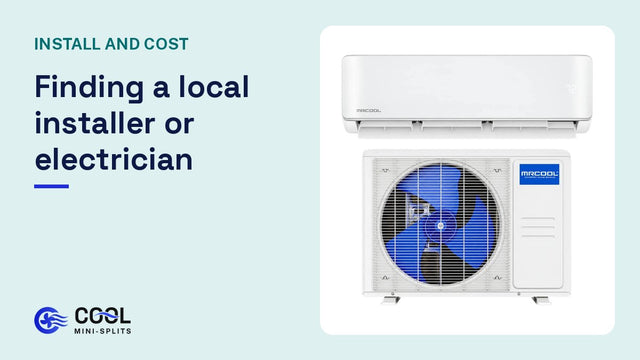
That's a fair choice if you have a bad back, no helper, or a house that makes the job hard. Expect to hire two people: a handyman or installer for the mechanical side, and an electrician for the circuit.
Ask before you book, because some HVAC contractors won't install equipment they didn't sell, and some won't put a labor warranty on it. A handyman who has done mini splits before is often easier to schedule.
Show them the manual before they quote. A pre-charged line set that can't be cut, a fixed-length route and a torque spec are things a good installer wants to know up front. Our guide to finding a local installer covers where to look and what to ask.
What if your house doesn't fit the usual pattern?
What if the outdoor unit has to go on a second-story wall?
Hire that piece. Lifting a heavy outdoor unit onto a wall bracket from a ladder is the single most dangerous step in the whole job. You can still do the indoor side yourself.
What if I'm putting in a multi-zone system?
Each room has its own line set into one outdoor unit, so you'll make the same connections three, four or more times. The work is the same per room, and each one goes faster than the first. Runs through finished ceilings or attics are where people often bring in help. Start with how multi-zone works.
What if I get stuck halfway?
Stop at a safe point. If the fittings aren't connected yet, leave the caps on and the line set coiled. If they are, leave them alone and keep the breaker off. A handyman can pick up from there, and your manual and MRCOOL support at support.mrcool.com can answer technical questions. Our phone line is for sizing and choosing a system, so we can't talk you through an install.
What if my panel is full?
Then hire the electrician early and get the panel looked at before you order. A subpanel or service upgrade changes the budget far more than anything else on this list.
Next: what does each path cost once every part is added?
How to decide this week
Walk outside and look at the wall where the outdoor unit would go. Ground level, wood siding and a panel with open slots point to splitting the job. A second-story wall, brick or a full panel point to hiring those pieces.
Then size the room with our sizing guide and compare the three lines on the comparison chart. If you want help choosing the size or line, call us at +1 (844) 999-9725, Monday to Friday, 9 AM to 5 PM EST.