
Do you need a 110V or a 220V mini split?
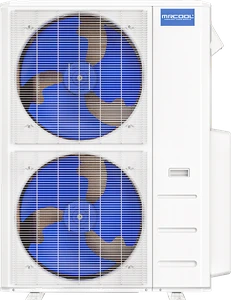
Short answer: It depends on the size. Every MRCOOL DIY 9K and 12K single zone, in DIY Select, DIY EasyPro and DIY 5th Gen, runs on 115V. The 18K, 24K and 36K and every multi-zone system need 230V. Neither one plugs into an outlet: the outdoor unit needs its own circuit from your panel and a disconnect within sight.
Voltage is one of the first questions people ask us, usually because they're worried about the panel or the electrician's bill. The good news is you don't pick the voltage. You pick the size the room needs, and the voltage comes with it.
This guide shows the voltage for every MRCOOL DIY size, what each kind of circuit involves, and what to check before you order.
Are 110V, 115V, 120V and 220V, 230V, 240V the same?
Yes, for buying a mini split. Homes in the U.S. get about 120 volts at a normal outlet and about 240 volts across two legs of the panel. People say "110V" or "120V" for the first and "220V" or "240V" for the second, while equipment labels usually say 115V and 230V. A "110V mini split" and a "115V mini split" run on the same circuit.
Which MRCOOL DIY sizes run on 115V and which need 230V?
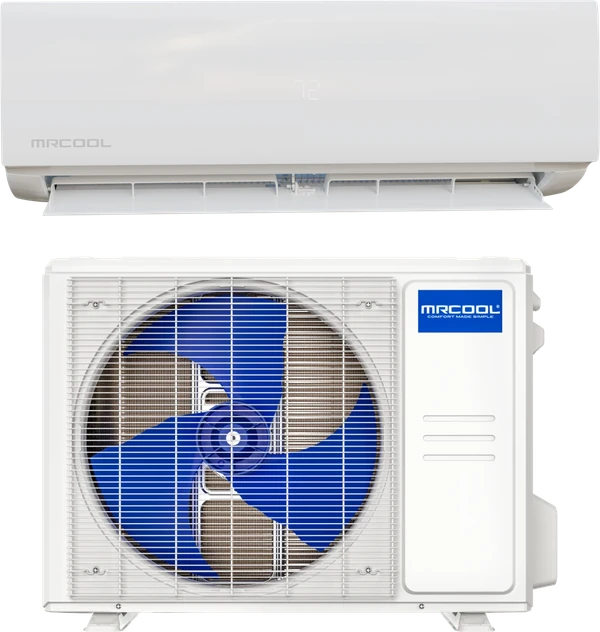
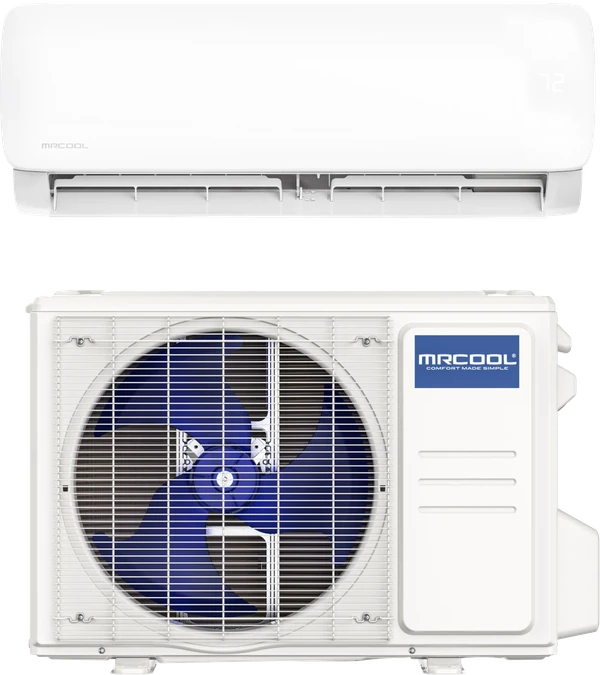
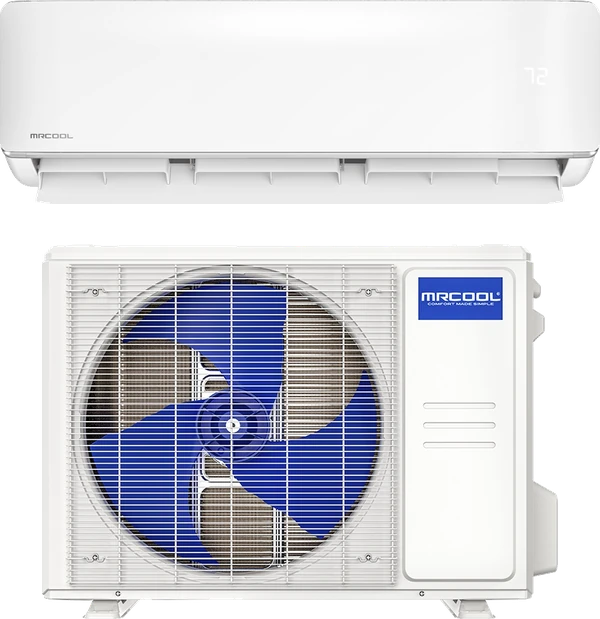
The rule is the same in all three series: 9K and 12K on 115V, 18K and up on 230V.
| Size | Room up to | Voltage | DIY Select | DIY EasyPro | DIY 5th Gen |
|---|---|---|---|---|---|
| 9K | 400 sq ft | 115V | $1,249 | $1,487 | $2,329 |
| 12K | 550 sq ft | 115V | $1,399 | $1,599 | $2,359 |
| 18K | 800 sq ft | 230V | $1,690 | $1,806 | $2,909 |
| 24K | 1,050 sq ft | 230V | $1,899 | $2,109 | $3,329 |
| 36K | 1,550 sq ft | 230V | Not made | Not made | $3,769 |
| Multi-zone, 18K to 55K | 2 to 6 rooms | 230V | Not made | Not made | From $2,923 |
Single zone prices as of November 2026. Room sizes are the DIY 5th Gen maximums for an average room with 8 ft ceilings; the sizing guide covers rooms with high ceilings, lots of sun or a kitchen.

Can you plug a 110V mini split into a wall outlet?
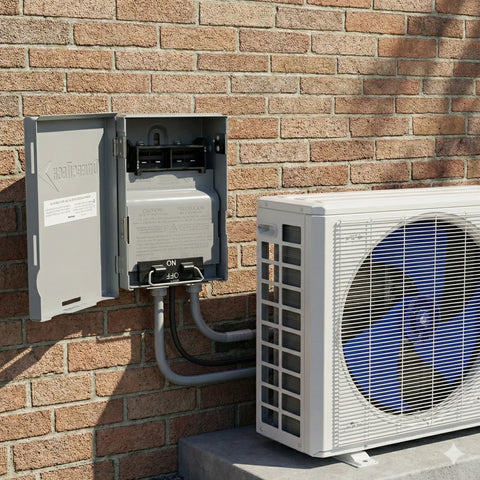
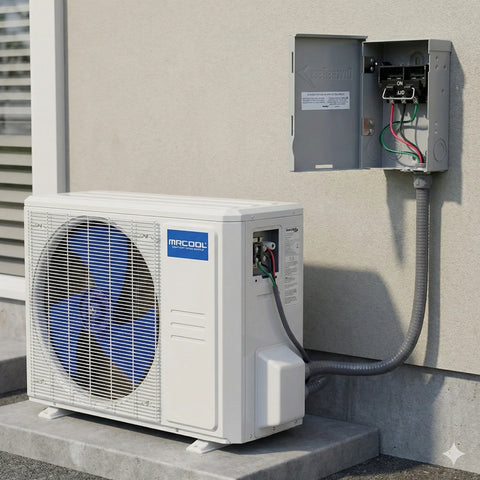
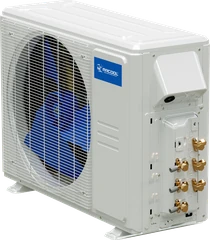
No. A 115V MRCOOL DIY unit is hard-wired, the same as a 230V one. The outdoor unit gets its own dedicated circuit and breaker at the panel, then a disconnect switch on the outside wall within sight of the unit, then a short flexible conduit (the whip) into the unit.
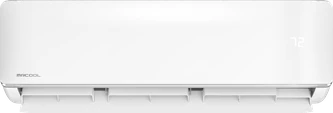
You don't need a circuit or an outlet for the indoor unit. It gets its power from the outdoor unit through the communication cable in the line set.
What does the electrical hookup include?
None of the systems include the electrical parts, so plan for these:
- A breaker and wire from the panel. Single-pole for 115V, two-pole for 230V. The right breaker and wire size for each model are in the installation manual for your size.
- A disconnect. Most people use a 60A non-fused disconnect ($59).
- A whip. A non-metallic whip ($72) runs from the disconnect into the outdoor unit.
- A pad or bracket for the outdoor unit. An equipment pad ($172) or a wall bracket ($77).

Is a 115V mini split cheaper to run?
No. The power bill depends on how much heat the unit moves and how efficient it is, not on the voltage. A 230V unit draws about half the amps of a 115V unit for the same watts, but you pay for watts. A 9K or 12K costs less to run than an 18K because it's smaller, not because it's on 115V.
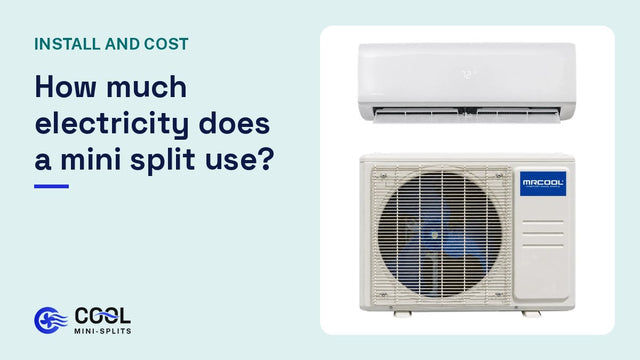
For real numbers by size and series, see how much electricity a mini split uses.
What if your panel is almost full?
A 115V circuit takes one breaker space and a 230V circuit takes two. If your panel has one open space left, a 9K or 12K can be the simpler choice for a small room. If it has none, an electrician can tell you whether the panel can take another breaker or needs a subpanel, and that answer may change your total cost more than the system price does.
Don't buy a smaller unit just to stay on 115V if the room needs an 18K. An undersized unit runs flat out on hot days and still leaves the room warm.
Next: What does a DIY mini split cost all in?
Do you need an electrician?
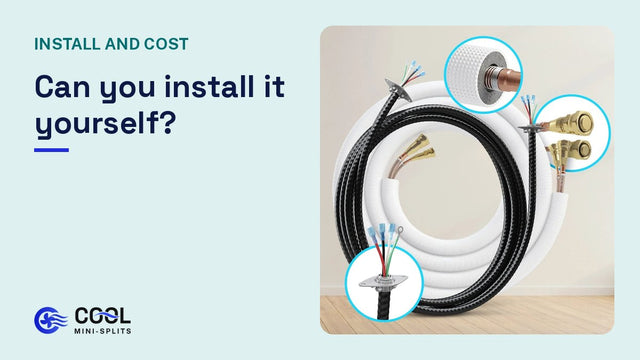
For the refrigerant side, no: the MRCOOL DIY line set comes pre-charged and connects by hand. For the circuit, it depends on your town. Many require a licensed electrician or a permit to add a circuit, and permits typically run about $50 to $300. Running one circuit and a disconnect is a short job for an electrician, and it's often the only part of a DIY install people hire out.

How to choose
- Size the room first with the sizing guide. The voltage follows the size.
- If the room needs a 9K or 12K, any of the three series runs on 115V.
- If it needs 18K or more, or you want several rooms on one multi-zone system, plan for a 230V circuit.
- Check your panel for open breaker spaces and ask your town whether the circuit needs a permit or a licensed electrician.
- Add the disconnect, whip and pad or bracket to your order so everything arrives together.
Want us to check your plan? Call +1 (844) 999-9725, Monday to Friday, 9 AM to 5 PM EST.