

Is a mini split worth it in Maine?
Short answer: Yes, for most Maine homes. Portland logs about 321 cooling hours and 2,728 heating hours a year (ENERGY STAR), so it works as the heater first and the air conditioner in summer. Every city in the table below saw nights under −13°F in the last ten winters, down to −30°F in Caribou, and the DIY series heat down to −13°F, so plan on a backup heat source for the coldest nights anywhere in Maine. In Caribou even a design day is colder than that, so the backup runs more often there. Power costs 32.1¢ per kWh, above the US average of 18.2¢, so the efficiency of DIY 5th Gen saves more here. Size each room with the standard chart and go one size up for west-facing or top-floor rooms.
Maine by region
The table shows the numbers HVAC sizing uses for Maine’s main cities.
| Region (climate zone) | Summer high | Winter low | Coldest, last 10 winters | Main job |
|---|---|---|---|---|
| Portland (6A) | 83.3°F | 0.1°F | −17°F | Heating first, backup for cold snaps |
| Bangor (6A) | 84°F | −6.8°F | −24°F | Heating first, backup for cold snaps |
| Caribou (7) | 81.4°F | −13.7°F | −30°F | Heating first, backup for cold snaps |
Design temperatures: ASHRAE 2021 climatic design conditions (1% cooling, 99.6% heating dry bulb) for each airport station. Climate zones: 2021 IECC by county (PNNL guide). Coldest: NOAA station records, December 2016 to February 2026.
Heating through Maine winters
Portland logs 2,728 full-load heating hours a year against 321 cooling hours (ENERGY STAR). A mini split moves heat in from the outside air instead of burning fuel, and the inverter runs at partial speed for most of the winter.
Will it heat in a Maine cold snap?
Down to −13°F, yes. In the last ten winters these stations went colder: Caribou −30°F, Bangor −24°F and Portland −17°F. Keep a backup heat source for the coldest nights there.
What size for a Maine room
Measure each room (length × width) and match it to an indoor unit.
| Room size | Indoor unit | Single zone voltage |
|---|---|---|
| Up to 250 sq ft | 6K BTU (multi-zone only) | – |
| 251–400 sq ft | 9K BTU | 115V |
| 401–550 sq ft | 12K BTU | 115V |
| 551–800 sq ft | 18K BTU | 230V |
| 801–1,050 sq ft | 24K BTU | 230V |
| 1,051–1,550 sq ft | 36K BTU | 230V |
Go one size up for rooms with west or south windows, a top floor under the roof, high ceilings, poor insulation, or a kitchen. A garage that isn’t insulated also goes one size up. Full sizing guide
Several rooms? See multi-zone systems
What it costs to run in Maine
Yearly cost to heat and cool one room with Portland weather, at the Maine average power price.
| Size | DIY Select | DIY EasyPro | DIY 5th Gen |
|---|---|---|---|
| 9K | $1,212 | $1,280 | $1,058 |
| 12K | $1,616 | $1,565 | $1,436 |
| 18K | $2,527 | $2,477 | $1,937 |
| 24K | $3,342 | $3,305 | $3,070 |
| 36K | – | – | $5,058 |
Estimate, not a quote: (cooling BTU × 321 cooling hours ÷ SEER2 + heating BTU × 2,728 heating hours ÷ HSPF2) ÷ 1,000 × 32.11¢. Hours: ENERGY STAR heat pump savings calculator (Portland). Uses MRCOOL’s cold-climate rating (HSPF2 Region V). Product pages show the standard rating (Region IV), which is higher. Other cities: Caribou 220 cooling and 2,959 heating hours. Power price: EIA, August 2026.
What the equipment costs
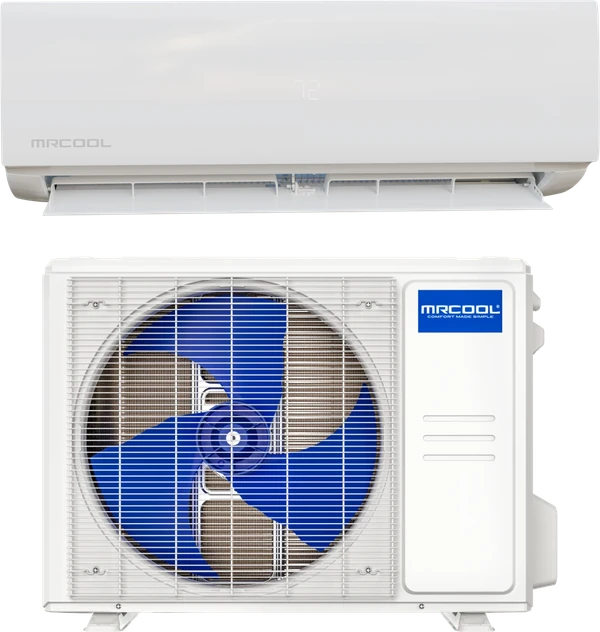
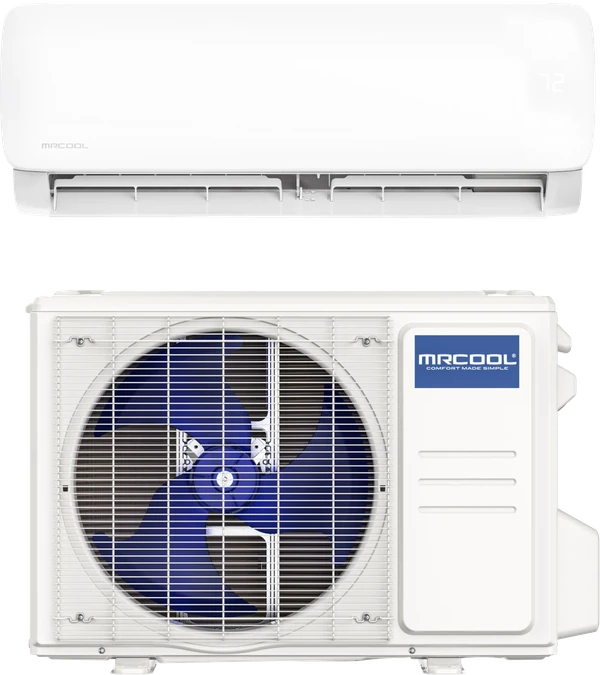
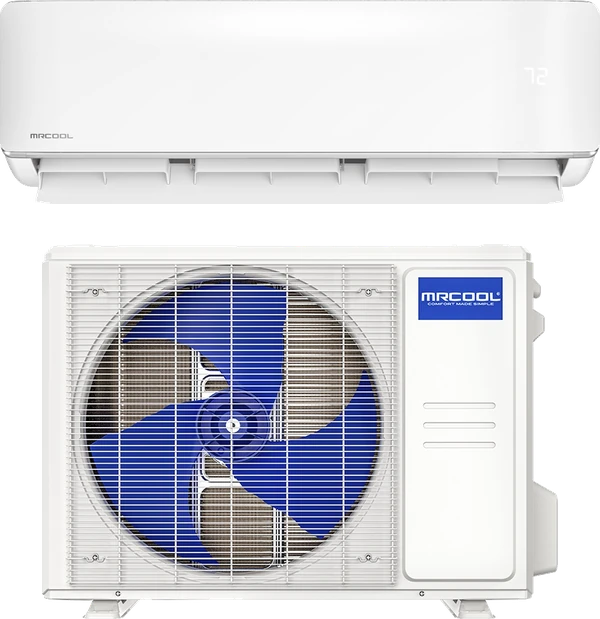
Prices for complete single zone systems: outdoor unit, indoor unit, pre-charged line set and remote. Shipping is free to Maine.
| Size | DIY Select | DIY EasyPro | DIY 5th Gen |
|---|---|---|---|
| 9K | $1,249 | $1,487 | $2,329 |
| 12K | $1,399 | $1,599 | $2,359 |
| 18K | $1,690 | $1,806 | $2,909 |
| 24K | $1,899 | $2,109 | $3,329 |
| 36K | – | – | $3,769 |
Rebates in Maine
MRCOOL’s rebate data lists 1 utility in Maine with rebates on our DIY models, and it needs a participating contractor, so a DIY install usually doesn’t qualify. The federal 25C tax credit ended for systems installed after December 31, 2025.
| Utility | Up to | Who installs | Series |
|---|---|---|---|
| Efficiency Maine (income-qualified) | $1,000 | Needs a participating contractor | DIY 5th Gen |
Rebates checked November 2026. Amounts change; confirm with your utility.
DIY or a pro
MRCOOL DIY systems are built for a homeowner install: the line set comes pre-charged and connects by hand, so there’s no vacuum pump or refrigerant work. Most people hire an electrician for the new circuit, and permit rules depend on your city. Can you install a mini split yourself?
Which MRCOOL system for Maine


Mini split questions for Maine
Is a mini split worth it in Maine?
For most homes, yes. It cools through Maine summers and heats through the winter, so one system covers the whole year; keep a backup heat source for the coldest nights.
Will it keep up in a Maine summer?
DIY EasyPro and DIY 5th Gen are rated by MRCOOL to cool with outdoor temperatures up to 122°F. Bangor designs for 84°F.
Does it heat in a Maine winter?
Yes. DIY Select heats down to −12°F outside and DIY EasyPro and DIY 5th Gen down to −13°F. The last ten winters went colder than that: Caribou −30°F, Bangor −24°F and Portland −17°F. Keep a backup heat source for those nights.
How much does it cost to run in Maine?
For a 12K room with Portland weather at 32.11¢ per kWh, about $1,616 a year with DIY Select, $1,565 with DIY EasyPro and $1,436 with DIY 5th Gen, heating and cooling together. Estimates, not quotes.
What size do I need for a Maine garage?
Use the same chart: measure length × width. A garage that isn’t insulated goes one size up.
Are there mini split rebates in Maine?
Some utilities list rebates for MRCOOL DIY models; see the table above. Check each program’s rules: many need a participating contractor. The federal 25C tax credit ended for systems installed after December 31, 2025.
Can I install it myself?
Yes. The pre-charged line set connects by hand, with no vacuum pump. Most people hire an electrician for the circuit, and permit rules depend on your city.
How long does shipping to Maine take?
Verified orders ship from Kentucky in 2 to 4 business days, then 3 to 7 by freight. Shipping is free to Maine.