
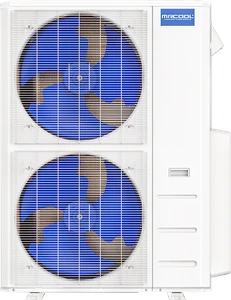

What is a mini split?
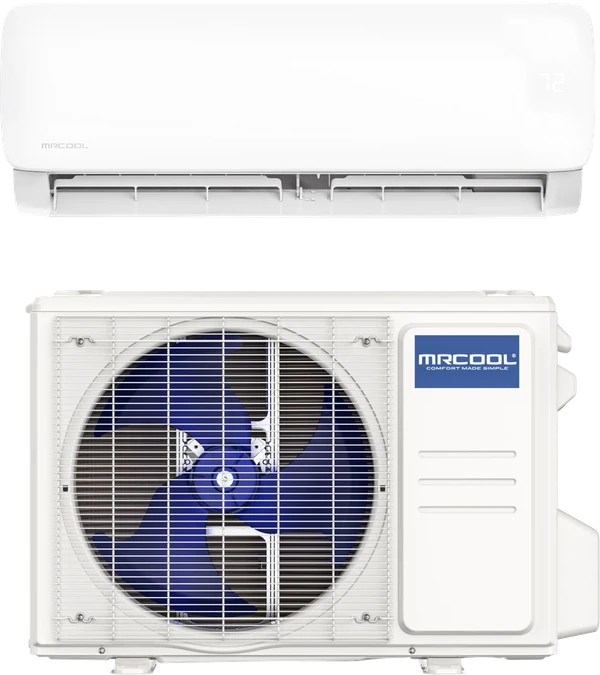
Short answer: A mini split is a heat pump that comes in two pieces: an outdoor unit with the compressor and an indoor unit on the wall or in the ceiling, joined by a line set through a 3-1/2 in hole. It cools in summer, heats in winter and needs no ducts. A MRCOOL DIY single zone system starts at $1,249, and the pre-charged line set means you can install most of it yourself.
If you've only lived with central air or window units, a mini split can look odd at first: a slim box high on the wall and a small unit outside, with no ducts or vents anywhere. It does the same job as central air for the room it's in, and it heats too.
This guide explains what's in the box, how the system moves heat, the difference between single zone and multi-zone, and the homes where a mini split is the better buy.
What are the parts of a mini split?
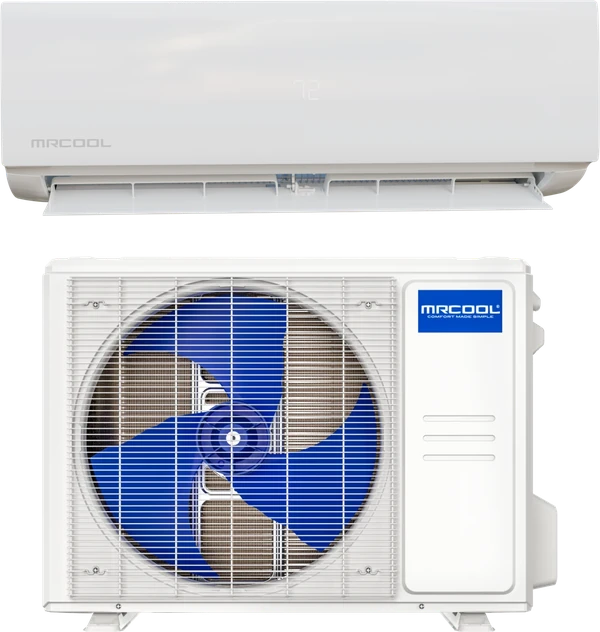
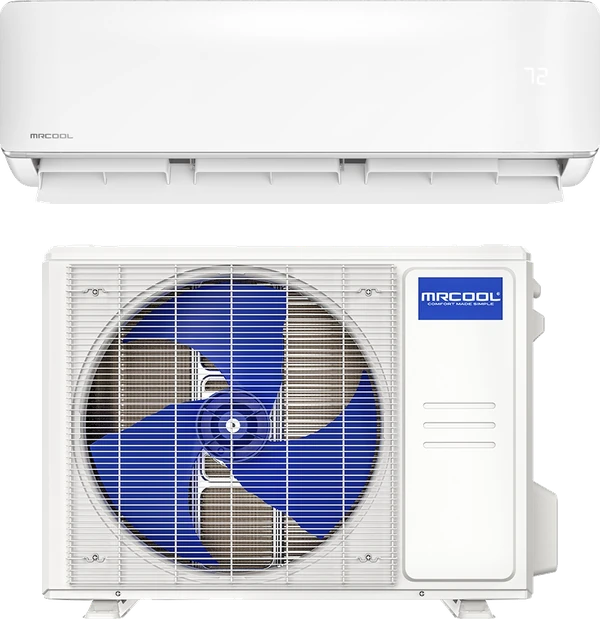
Every mini split has the same four parts. On a MRCOOL DIY system they all come in one box.
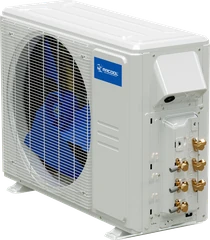
- Outdoor unit (condenser). Holds the compressor and the outdoor fan. It sits on a pad on the ground or on a wall bracket.
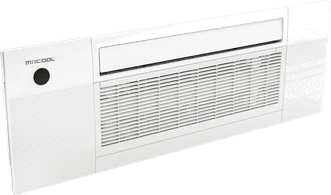
- Indoor unit. A wall unit mounted high on the wall, or on the DIY 5th Gen, a ceiling cassette that sits flush with the ceiling. It blows the cool or warm air into the room.
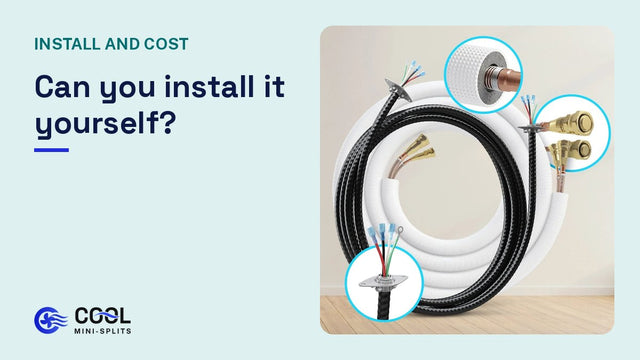
- Line set. Two copper refrigerant lines, the communication cable and the drain hose, wrapped together. They run through the wall to join the two units.
- Remote and app. A handheld remote, plus Wi-Fi control through the MRCOOL SmartHVAC app, Alexa or Google Assistant.

How does a mini split cool and heat?
A mini split doesn't make cold air. It moves heat from one place to another, the same way your fridge pulls heat out of the food and lets it out through the coils on the back.
In cooling mode, refrigerant in the indoor coil soaks up heat from the room air. The line set carries it to the outdoor unit, where the compressor and fan release it outside. Water in the room air also condenses on the cold coil and runs out through the drain hose, so the room gets drier as well as cooler.
In heating mode, a valve in the outdoor unit reverses the flow. The outdoor coil pulls heat out of the outdoor air, even on a freezing day, and the indoor unit releases it into the room. The MRCOOL DIY EasyPro and DIY 5th Gen keep heating down to −13°F outside, and the DIY Select down to −12°F.

What does “inverter” mean on a mini split?
An inverter compressor changes speed instead of switching fully on and off. Once the room reaches the temperature you set, it slows down and keeps running gently, which holds the temperature steadier and uses less power than a unit that keeps cycling on at full blast.
Every MRCOOL DIY system is an inverter heat pump. The indoor unit runs as quiet as 18 dB(A) in silent mode, quieter than a whisper.
Single zone or multi-zone?
A single zone system is one outdoor unit with one indoor unit, for one room or one open space. DIY Select, DIY EasyPro and DIY 5th Gen all come as single zone systems, from 9K to 36K BTU.
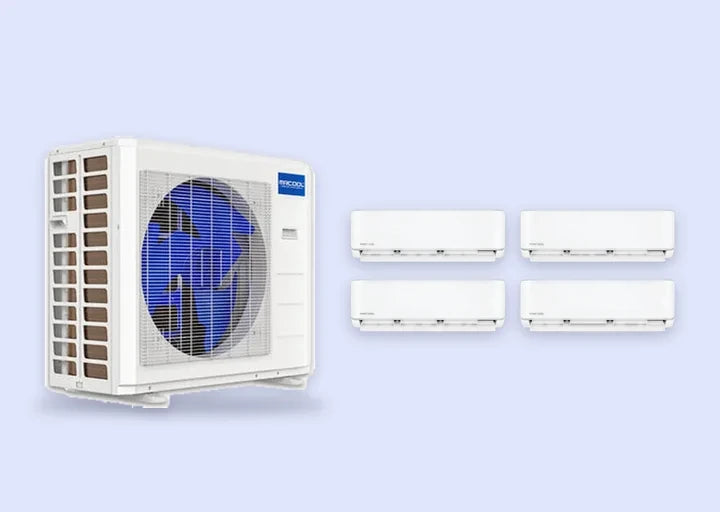
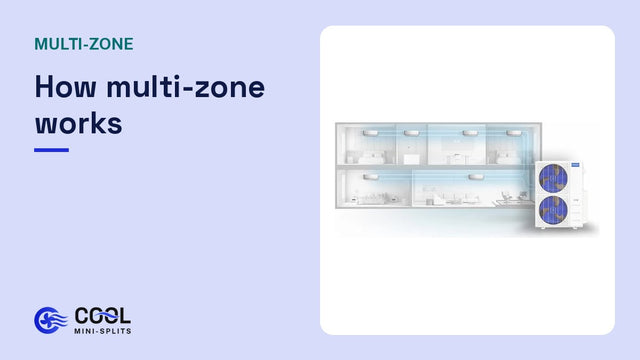
A multi-zone system runs 2 to 6 indoor units from one outdoor unit, and each room gets its own temperature. In the MRCOOL DIY range, only the DIY 5th Gen comes as multi-zone, from $2,923 for a 2-zone 18K system. Our guide on how multi-zone works covers how one outdoor unit shares its capacity between rooms.

How does a mini split compare to central air and window units?
A mini split sits between a window unit and central air: it treats rooms one at a time like a window unit, but it's permanent, quiet and heats as well as cools.
| Mini split | Central air | Window unit | |
|---|---|---|---|
| Needs ducts | No | Yes | No |
| Heats | Yes, heat pump | Only with a furnace or heat pump | Most don't |
| Temperature control | Each room | One thermostat for the house | Each room |
| Noise inside | From 18 dB(A), compressor outside | Air through vents, unit outside | Compressor in the window |
| Blocks a window | No | No | Yes |
| DIY install | Yes with MRCOOL DIY, electrician for the circuit | No, needs an HVAC contractor | Yes |
For heat, the gap with electric baseboard is large. Making 12,000 BTU of heat takes about 3,517 watts with baseboard heaters and around 1,200 to 1,400 watts with a mini split, depending on the series. Our electricity guide works through the numbers.
When does a mini split make sense?
A mini split is usually the better buy when:
- The space has no ducts: a garage, an addition, a converted attic, a sunroom, a basement or an older house.
- One room is always hotter or colder than the rest of the house, like a bonus room over the garage.
- You're replacing window units or electric baseboard heat.
- Different people want different temperatures in different rooms.
- You want to add heating and cooling without paying an HVAC contractor to run ducts.
If your house already has good ducts and one central system that keeps every room comfortable, a mini split is more useful as an add-on for the one room central air doesn't reach than as a replacement.

Wall units are the most common indoor unit. The DIY 5th Gen also offers a ceiling cassette that sits between the joists and leaves the walls clear.
Can you install a mini split yourself?
With a MRCOOL DIY system, most homeowners can. The line set comes pre-charged with refrigerant and connects by hand with Quick Connect fittings, so you need no vacuum pump, no gauges and no HVAC license. The jobs are mounting the indoor unit, drilling the wall hole, setting the outdoor unit and joining the lines.
The electrical side is different. The outdoor unit needs its own circuit from your panel, and many towns require a licensed electrician or a permit for that part. Our guide on 110V vs 220V explains which sizes need which circuit, and can you install a mini split yourself walks through each step.

What size mini split do you need?
Mini splits are sized in BTU. These are the maximum room sizes for an average room with 8 ft ceilings, from the DIY 5th Gen listings:
| Size | Room up to | Power | Single zone from |
|---|---|---|---|
| 9K BTU | 400 sq ft | 115V | $1,249 (DIY Select) |
| 12K BTU | 550 sq ft | 115V | $1,399 (DIY Select) |
| 18K BTU | 800 sq ft | 230V | $1,690 (DIY Select) |
| 24K BTU | 1,050 sq ft | 230V | $1,899 (DIY Select) |
| 36K BTU | 1,550 sq ft | 230V | $3,769 (DIY 5th Gen) |
Prices as of November 2026. Go one size up for high ceilings, big south or west windows, poor insulation or a kitchen. The sizing guide takes you through it room by room.
Next: Which MRCOOL DIY series should you buy?
Ready to pick your mini split?
Measure the room, check the ceiling height and decide where the outdoor unit can sit. Then pick the series: DIY Select for the lowest price, DIY EasyPro for real winters in one room, or DIY 5th Gen for several rooms, a 36K size or the longest warranty. Our comparison chart puts all three side by side.
Not sure which fits your home? Call us at +1 (844) 797-7007, Monday to Friday, 9 AM to 5 PM EST.
This article is part of our MRCOOL Mini-Split Mastery Guide, which covers sizing, line sets, electrical, installation and cost in one place.